
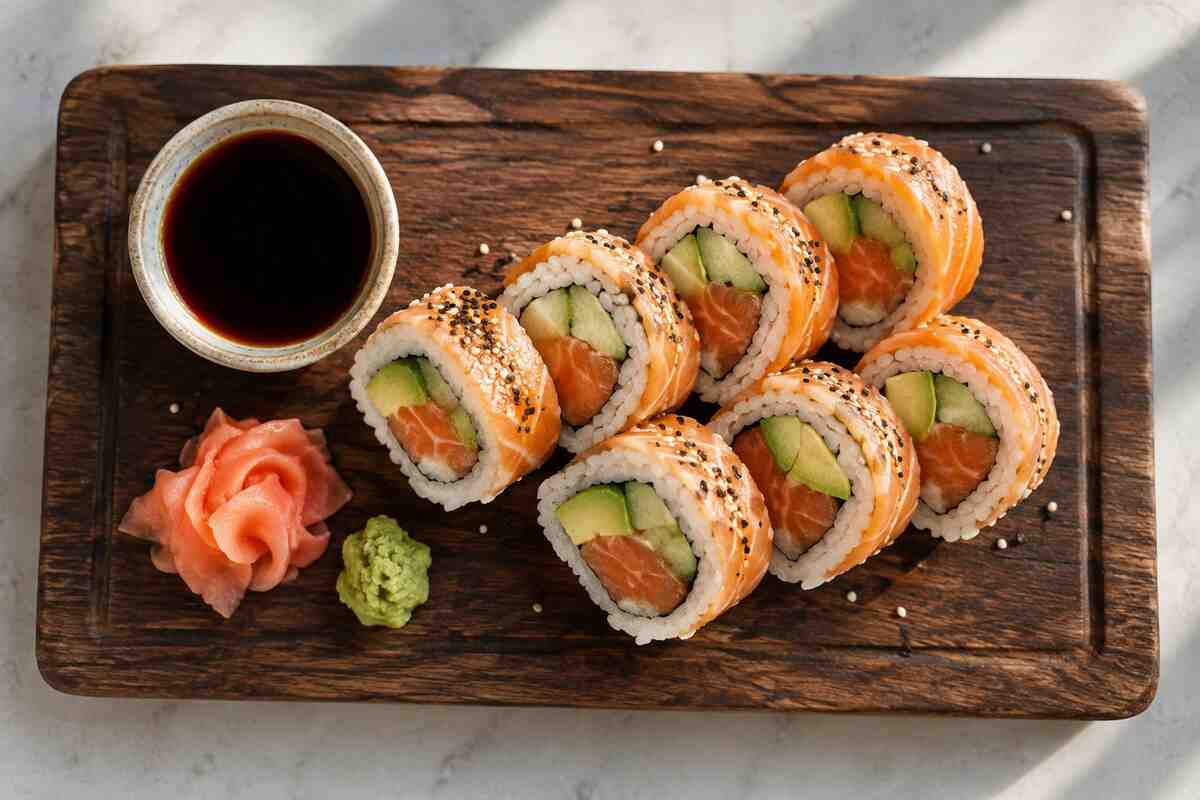
If you’ve ever wanted to try making sushi at home but felt unsure where to start, an Alaska roll is one of the easiest and most forgiving options. It’s made with cooked salmon instead of raw fish, so you skip the guesswork around sushi-grade seafood, and the ingredients are simple enough to find at most grocery stores.
This guide walks you through what an Alaska roll is, what goes into it, and how to make one step by step. You’ll also learn common mistakes to avoid, how it compares to a California roll, and answers to the questions people ask most.
What Is an Alaska Roll?
An Alaska roll is a sushi roll made with cooked or smoked salmon, avocado, and cucumber, wrapped in seasoned rice and nori. Because it uses cooked salmon rather than raw fish, it’s a natural starting point if you’re new to sushi or prefer not to handle raw seafood.
The roll is believed to have originated in North America, inspired by the region’s love of salmon rather than traditional Japanese sushi. This isn’t unusual. Many popular rolls, including the California roll, were created outside Japan to suit local ingredients and tastes.
What makes the Alaska roll appealing is the mix of textures: creamy avocado, tender salmon, and a light crunch from cucumber, all wrapped around lightly seasoned rice.
Ingredients You’ll Need
You don’t need a long shopping list for this recipe. Here’s what goes into a classic version:
- Sushi rice (short-grain, not long-grain or jasmine)
- Rice vinegar, sugar, and salt for seasoning the rice
- Nori sheets
- Cooked or smoked salmon
- Avocado, thinly sliced
- Cucumber, cut into thin strips
- Sesame seeds for garnish (optional)
- Soy sauce, pickled ginger, and wasabi for serving
If you can’t find sushi-grade fish, cooked salmon works well and is actually the traditional choice for this roll. It also means you can skip the extra care raw fish requires, which the FDA outlines in its seafood safety guidelines. That’s one reason this roll is popular with beginners.
Tools You’ll Need for Rolling Sushi
A few basic tools make the process much easier, and most are reusable for years.
- Bamboo rolling mat to shape and tighten the roll
- Sharp knife for clean slices (a dull blade will crush the roll)
- Rice paddle or spatula to spread rice without mashing it
- Plastic wrap to cover the bamboo mat and prevent sticking
- Bowl of water with a splash of vinegar for wetting your hands so the rice doesn’t stick
If you don’t have a bamboo mat, a clean kitchen towel can work as a substitute, though the mat gives you more control over the shape.
How to Prepare Sushi Rice
Rice is where most beginners run into trouble, so it’s worth taking your time here. Properly seasoned rice makes the biggest difference between sushi that tastes right and sushi that just looks right.
- Rinse the rice under cold water until it runs mostly clear. This removes excess starch that can make the rice gummy.
- Cook the rice according to the package instructions, or use a rice cooker for consistent results.
- While the rice is still warm, fold in rice vinegar, sugar, and salt using a cutting motion rather than stirring.
- Let the rice cool to room temperature before using it. Warm rice will wilt the nori and make rolling messy.
Skipping the seasoning step is a common mistake. Plain steamed rice will hold a roll together, but it won’t taste like real sushi.
Step-by-Step Alaska Roll Recipe
Once your rice has cooled and your ingredients are prepped, you’re ready to roll.
- Place a sheet of nori, shiny side down, on your bamboo mat.
- With wet hands, spread a thin, even layer of rice over the nori, leaving about an inch of space at the top edge.
- Flip the nori so the rice faces down against the mat. This creates the inside-out style typical of an Alaska roll.
- Lay strips of salmon, avocado, and cucumber in a line across the center.
- Lift the edge closest to you with the bamboo mat and roll forward tightly over the filling, applying gentle, even pressure.
- Continue rolling until you reach the far edge, then give the roll a gentle squeeze to set its shape.
- Slice into six to eight even pieces with a sharp, slightly wet knife, wiping the blade between cuts.
Serve right away with soy sauce, pickled ginger, and a small amount of wasabi.
Tips for Rolling Sushi Without Tearing It
- Wet your hands before touching the rice. Dry hands cause sticking and can tear the nori.
- Don’t overfill. Too much filling makes rolling and slicing harder.
- Keep pressure even. Rolling too loosely causes the roll to fall apart; rolling too tightly pushes filling out the sides.
- Use a sharp, wet knife for clean slices.
- Work in a cool kitchen, since warm rice and warm hands make everything stickier.
Common Mistakes to Avoid
- Using the wrong rice. Long-grain rice won’t hold together, so stick to short-grain sushi rice.
- Skipping the rice seasoning. Unseasoned rice tastes flat and lacks the signature tang.
- Overstuffing the roll. Less filling than you’d expect usually rolls better.
- Slicing with a dry knife. This drags and tears the nori instead of cutting cleanly.
- Rushing the rolling motion. Slow, even pressure gives a better result than rolling quickly.
If your first roll doesn’t turn out perfectly, that’s normal. Most home cooks need a couple of tries before the technique clicks.
Alaska Roll vs. California Roll
These two rolls are often confused since they look similar and are both considered beginner-friendly. The main difference comes down to the protein.
| Feature | Alaska Roll | California Roll |
| Main protein | Salmon | Imitation crab |
| Avocado | Yes | Yes |
| Cucumber | Yes | Yes |
| Origin | North America | North America |
| Flavor | Rich, slightly fatty from salmon | Milder, slightly sweet from crab |
If you prefer real fish over imitation crab, the Alaska roll is generally the better choice.
Alaska Roll Nutrition and Calories
A typical Alaska roll with 6 to 8 pieces contains roughly 300 to 350 calories, though this varies based on rice quantity and salmon portion size.
- Calories: 300–350 per roll
- Protein: 10–14 grams, mainly from the salmon
- Fat: 8–12 grams, largely from avocado and salmon
- Carbohydrates: 40–50 grams, mostly from the rice
Compared to fried or tempura rolls, the Alaska roll is a relatively light option. Salmon also adds omega-3 fatty acids, giving it a nutritional edge over rolls made with imitation crab or fried ingredients.
Best Sauces and Sides to Serve With It
- Soy sauce for light dipping; avoid oversoaking, which can overpower the salmon
- Spicy mayo for extra richness
- Eel sauce for a sweet, savory glaze
- Pickled ginger to cleanse the palate between bites
- Wasabi, used sparingly, mixed into soy sauce or dabbed directly on the roll
- Miso soup or edamame as classic sides
How to Store and Reheat Leftover Sushi
Sushi is best eaten fresh, but if you have leftovers, here’s how to handle them safely.
- Refrigerate promptly in an airtight container, ideally within two hours of making it.
- Eat within 24 hours, since rice hardens and fish quality declines quickly after that.
- Don’t microwave sushi rolls. Reheating makes the rice tough and affects the texture of the salmon and avocado.
- Let leftovers sit at room temperature for 10 to 15 minutes before eating, since fridge-cold rice tends to taste dense and dry.
If you know you won’t finish a batch, it’s better to make smaller portions fresh rather than plan on leftovers.
Frequently Asked Questions
Is an Alaska roll raw fish?
Not usually. Most Alaska rolls use cooked or smoked salmon, making them a good choice if you’d rather avoid raw fish.
Is an Alaska roll healthy?
It’s a fairly balanced option, offering protein and healthy fats from salmon and avocado, along with carbohydrates from the rice. It’s generally lighter than fried sushi rolls.
What’s the difference between an Alaska roll and a Philadelphia roll?
A Philadelphia roll includes cream cheese along with salmon, giving it a richer, tangier flavor. An Alaska roll skips the cream cheese and relies on avocado for creaminess instead.
Can I make an Alaska roll without a bamboo mat?
Yes, though it’s trickier. A sturdy kitchen towel wrapped in plastic wrap can work in a pinch, but a bamboo mat gives you more control.
What type of salmon works best for this roll?
Cooked salmon, whether baked, poached, or smoked, is most common. If using raw salmon, make sure it’s labeled sushi-grade and comes from a trusted source.
Conclusion
Making an Alaska roll at home is easier than most people expect. Once you get the rice right and understand the basic rolling technique, the rest comes together quickly. Between the mild salmon, creamy avocado, and light crunch of cucumber, it’s easy to see why the Alaska roll has become a popular starting point for home sushi making.
Give it a try this week. Even if your first roll isn’t perfect, it’ll still taste like something worth making again.