Anyone who handles animals for a living has faced the moment when a spooked or defensive dog lunges, and the only real protection is whatever’s covering your legs. That’s why so many animal control officers, vet techs, and shelter staff look into Humaniac Safety Outer Pants. Before buying, though, almost everyone asks the same question: will these actually fit over a uniform, duty belt, and boots, or will they fight your existing gear all shift?
This guide answers that question directly. It covers how Humaniac Safety Outer Pants are built for layering, how they fit over standard uniforms and duty gear, what sizing looks like in practice, and where people tend to get the fit wrong.
What Are Humaniac Safety Outer Pants Designed For?
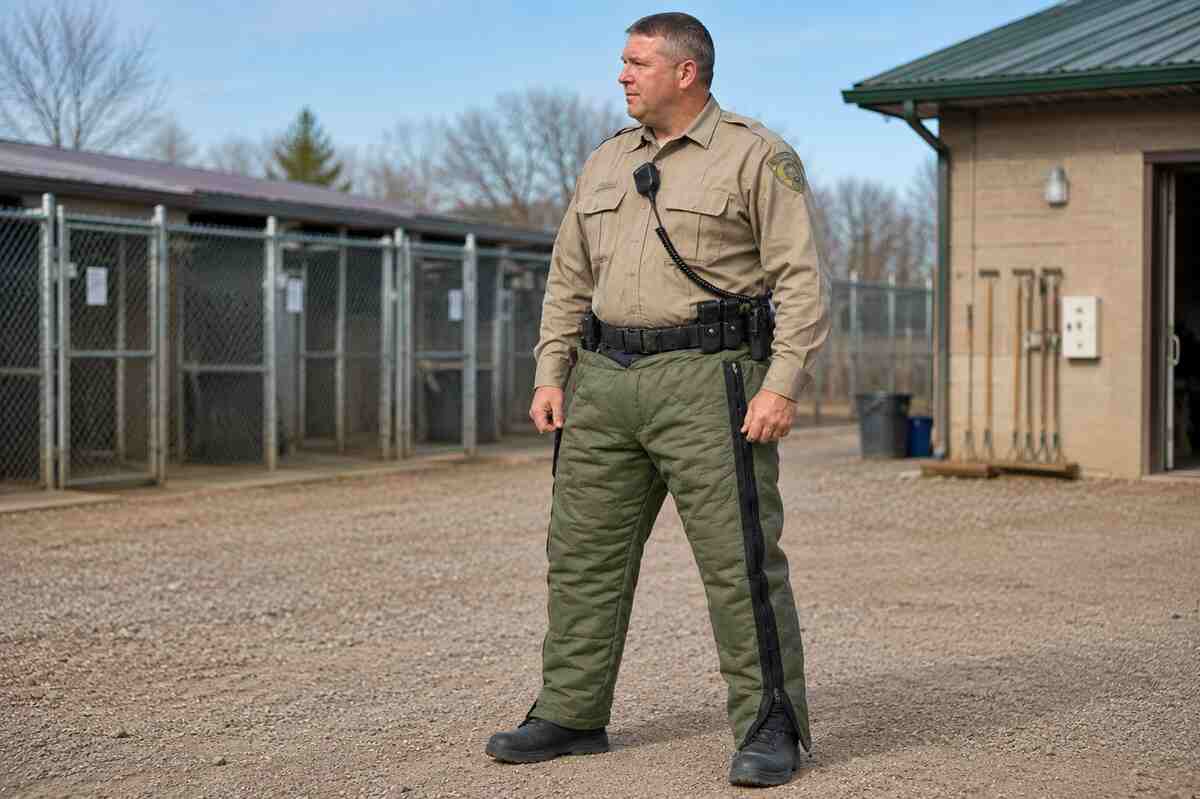
Humaniac Safety Outer Pants are Kevlar-lined overpants built for handlers who face a real risk of bites during animal restraint work. They’re made from Cordura and lined with DuPont Kevlar to reduce puncture and tear damage from a bite. This kind of layered protection reflects the equipment guidance laid out in NACA’s unified safety standard for animal control officers, which covers PPE, uniforms, and bite-resistant gear for officers in the field.
The word “outer” matters here. Unlike a full bite suit, these pants aren’t meant to be worn alone. They go over your existing clothing, which is exactly why fit-over-uniform matters so much. Size them wrong and you either can’t get them on over your gear, or they’re loose enough to bunch up and become a tripping hazard.
Most handlers wear them only during higher-risk situations, such as aggressive dog pickups, wildlife capture, or unpredictable shelter intakes, then remove them for lower-risk parts of the shift.
How the Design Supports Layering Over Clothing
A few construction details make these pants practical to wear over other clothes:
- A roomier cut through the hips and thighs than standard workwear, leaving space for uniform pants underneath
- An adjustable waist that cinches down over a slimmer uniform or loosens for bulkier winter gear
- Zippered ankles, which allow the pants to go on and off without removing boots first
That last detail matters more than it might seem. In a fast-response role, nobody wants to untie boot laces while dispatch is calling in an aggressive animal on scene.
Fit Over Standard Animal Control Uniforms
For most animal control uniforms, such as polyester-blend cargo pants or lightweight tactical trousers, Humaniac Safety Outer Pants fit without much adjustment. The looser thigh and hip cut accounts for a typical uniform’s thickness, and the adjustable waist takes up any extra room.
Fit gets tighter with insulated or lined winter uniforms. If your department issues thermal duty pants for cold weather, size up, since the added bulk underneath uses up the room the overpants normally have to spare.
A practical rule from regular users: try the pants on over your bulkiest seasonal uniform, not your lightest. If they fit comfortably over winter gear, summer uniforms won’t be a problem.
Wearing Them With Duty Belts and Utility Gear
Fit over a uniform is only part of the picture, since most handlers also wear a duty belt, loaded cargo pockets, and boots underneath. Common gear includes:
- A duty belt with a radio, glove pouch, or capture equipment
- Cargo pockets already carrying supplies
- Over-the-ankle work boots
The adjustable waistband is designed for this. It sits over a duty belt without digging in, since it isn’t meant to fit snugly at the natural waistline like regular pants. Bulky belt-mounted gear, such as a large holster or catch pole clip, can occasionally interfere with the waist closure, so it’s worth testing your full gear setup before relying on them in the field.
Cargo pockets underneath generally aren’t an issue, since the overpants have their own pockets and don’t press tightly against what’s beneath them.
Sizing Chart for Layering Over Uniforms
Because these pants are worn over clothing, sizing works differently than with regular pants. You’re sizing for your body plus a full uniform, not your body alone.
| If you normally wear | Consider sizing to |
| A slim or regular uniform fit | True to your normal size |
| A relaxed or cargo-style uniform | One size up |
| Insulated winter uniforms | One to two sizes up |
| Uniform plus heavy duty belt gear | One size up, minimum |
For reference, the manufacturer’s model is 6’3″ and about 95 kg, wearing a size XL. Use this as an anchor point when comparing your own build to the sizing chart.
When in doubt, size up. Overpants that are slightly loose are a minor inconvenience. Overpants that are too tight restrict movement exactly when full mobility matters most.
How the Adjustable Waist and Ankle Zippers Work
Two features do most of the work in making these pants layer-friendly.
The adjustable waist typically uses a strap-and-buckle or hook-and-loop system rather than a fixed elastic band. This lets the pants accommodate a wide range of underlying bulk, from a lightweight summer uniform to a heavier winter one, without needing separate sizes for different seasons.
The ankle zippers run partway up the lower leg, so you can step into the pants and zip them closed over your boots instead of removing footwear first. This saves time in a fast-response job and lets the pants be sized for boot clearance without being baggy everywhere else.
Together, these two features are what make the fit-over-uniform design work in practice, not just on paper.
Range of Motion While Wearing Them
Protection only helps if you can still move well in it, and adding a layer over existing clothing naturally adds some bulk.
Most users report the pants don’t meaningfully limit mobility for the movements that matter in animal handling: crouching, lunging, quick lateral steps, and kneeling to secure a carrier or leash. The Cordura shell has some give, and the roomier leg cut means less resistance with each stride.
The one place users notice stiffness is in prolonged squatting or very deep bending, simply because there’s more fabric layered at the knee and hip. Most handlers report the extra layer starts to feel normal after a few wears.
Common Fit Issues and How to Fix Them
A few fit problems come up repeatedly in handler feedback, and nearly all trace back to sizing based on body measurements alone, without accounting for the uniform worn underneath.
- Tight at the waist: Usually from ordering true to size without factoring in a duty belt or bulky uniform. Size up, especially if you carry gear on your belt.
- Bunching at the ankle: Happens when the zipper opening doesn’t match your boot type. Check the ankle zipper’s width against your specific boots before ordering.
- Restricted movement at the knee: Often from wearing insulated winter uniform pants underneath a true-to-size pair. Size up for cold-weather use.
- Waist closure not securing properly: Can happen with bulky belt-mounted gear. Test your full setup, including belt, radio, and pouches, before your first call.
Most fit complaints disappear once sizing accounts for the uniform-plus-gear combination rather than body size alone.
Safety Outer Pants vs. a Full Bite Suit
It helps to understand how these compare to a full bite suit, since some handlers aren’t sure which category fits their work.
A full bite suit covers the torso, arms, and legs, and is typically used for deliberate bite-work training, such as K9 training programs. It’s bulky, hot, and impractical for wearing through a normal shift.
Humaniac Safety Outer Pants serve a different purpose: general-duty protection for handlers who face occasional bite risk during otherwise normal work, not planned bite training. They’re lighter, faster to put on, and designed to be worn over a regular uniform for as long as a call requires, then removed just as quickly.
If your role involves structured bite-work training, a full suit is the right tool. If your role is animal control, vet handling, or shelter work where the risk is situational rather than constant, outer pants like these are the more practical choice for daily wear.
Tips for a Comfortable, Secure Fit
A few small adjustments make a noticeable difference once you have the right size:
- Test fit over your bulkiest typical uniform, not your lightest
- Adjust the waist strap snug enough to stay in place during movement but loose enough not to dig in over a duty belt
- Check ankle zipper clearance against your actual duty boots, not casual shoes
- Break the pants in with a few short wears before relying on them for a high-risk call
- Store them loosely folded rather than tightly rolled, so the Kevlar lining doesn’t develop stiff crease points
None of these take more than a few minutes, but they make the difference between overpants that feel like a natural part of your gear and ones that feel like an obstacle.
Are They Practical for Daily Uniform Wear?
For most animal control officers, vet staff, and handlers, Humaniac Safety Outer Pants fit comfortably over standard work uniforms, provided you size for your uniform and gear setup rather than your body alone. The adjustable waist and zippered ankles do real, practical work in making that layering possible, and the roomier cut is clearly designed with a uniform underneath in mind.
The main adjustment point is winter or heavily-geared setups, where sizing up from the start is worth doing rather than discovering the issue on a cold-weather call.
FAQs
Can I wear Humaniac Safety Outer Pants over cargo-style work pants?
Yes. The roomier hip and thigh cut is designed to accommodate cargo-style and standard-issue uniform pants without needing to size up in most cases.
Do I need to size up for winter uniforms?
Generally yes. Insulated or lined winter duty pants add enough bulk that most handlers find one to two sizes up more comfortable underneath.
Will they fit over a duty belt?
The adjustable waist is built to sit over a duty belt without digging in, though bulky belt-mounted gear can occasionally interfere with the waist closure. Test your full setup before your first call.
Do I need to take my boots off to put them on?
No. The zippered ankles let you step into the pants and zip them closed over your boots, which speeds up suiting up between calls.
Are they comfortable to move in?
Most users report good mobility for typical handling movements like crouching and quick steps, with some added stiffness during deep, prolonged bending due to the extra fabric layer.
What’s the difference between these and a full bite suit?
A full bite suit covers the torso and arms for dedicated bite-training work. Humaniac Safety Outer Pants are lighter, faster to put on, and built for general-duty leg protection over a regular uniform.
Conclusion
Fit is the deciding factor for anyone considering Humaniac Safety Outer Pants, and they’re genuinely built to work over a real uniform, not just a bare leg in a product photo. Between the adjustable waist, zippered ankles, and roomier cut, they handle everyday duty gear well, as long as you size based on your full uniform and equipment setup rather than body measurements alone.
The takeaway is simple: try Humaniac Safety Outer Pants on over your bulkiest uniform and full gear before your first real call, size up when in doubt, and you’ll get a pair that protects you without slowing you down.