
Myanmar tourism news sends mixed signals. Advisory trackers list the US, Canada, Australia, Japan, Germany and many other governments at their highest “do not travel” level. Meanwhile, Myanmar’s authorities want to double tourist arrivals this year to 1.8 million. Both are true at the same time.
This guide covers which areas are open, which to avoid, how entry rules work, how to get there, and where to find reliable updates. It doesn’t tell you whether to go. Most governments say no, and the decision is yours.
Myanmar Tourism News: Is the Country Open to Visitors Now?
Technically, yes. Foreign tourists can enter on a visa and flights run daily. Myanmar recorded 973,263 international visitors in 2025. The tourism ministry says more than 700,000 foreign visitors arrived in the first eight months of 2026, up 7% year on year.
“Open” does not mean “safe,” though. After the military-run elections in December 2025 and January 2026, one traveler-information service describes the security situation as extremely tense. Germany’s Federal Foreign Office advises against travel, and its warning was last reviewed on July 28, 2026, unchanged since May 6, 2026.
The country is also far from its tourism peak. Arrivals reached 4.5 million in 2015 and have fallen sharply since the 2021 coup. In practice, tourism is limited to a few places, covered below.
Current Entry Status for Foreign Travelers
Most visitors enter on an e-Visa. A few points to know:
- Entry points: E-visa holders can enter through Yangon, Mandalay, and Nay Pyi Taw international airports.
- Accommodation: Tourists must stay in registered hotels, guesthouses, resorts, or on a boat. Private homestays are not allowed.
- Visa on arrival: A trial scheme for travelers from China and India has been extended from August 30, 2026 to August 29, 2027. It doesn’t apply to most Western passports.
- Recent disruption: At least one travel outlet reported a suspension of tourist e-visas and advised travelers to confirm that issuance has resumed before buying flights.
Rules change quickly, so check the official portal before booking.
Popular Destinations Currently Open to Tourists
Nearly every report points to the same four places, known as the “Tourist Kite”: Yangon, Bagan, Mandalay, and Inle Lake, which form a kite shape when joined on a map. Travel Weekly Asia reports that these major attractions are open, while formerly popular regions such as Kayah State and southern Chin State remain off limits for security reasons.
These four areas sit where authorities keep tight control and where tourist infrastructure survived the conflict. One independent traveler who visited Yangon, Bagan, and Inle Lake found them as safe as anywhere in Southeast Asia, but said anything outside the kite is off-limits for now. That is one person’s account, and conditions can change. Use the kite as a starting point for research, not a guarantee.
Bagan, Inle Lake and Yangon: What Visitors Can Expect
Yangon
Yangon is the main gateway and the easiest base. It has the widest choice of hotels, the best hospitals, and the most flights. Embassies operate here too, which matters if something goes wrong.
Bagan
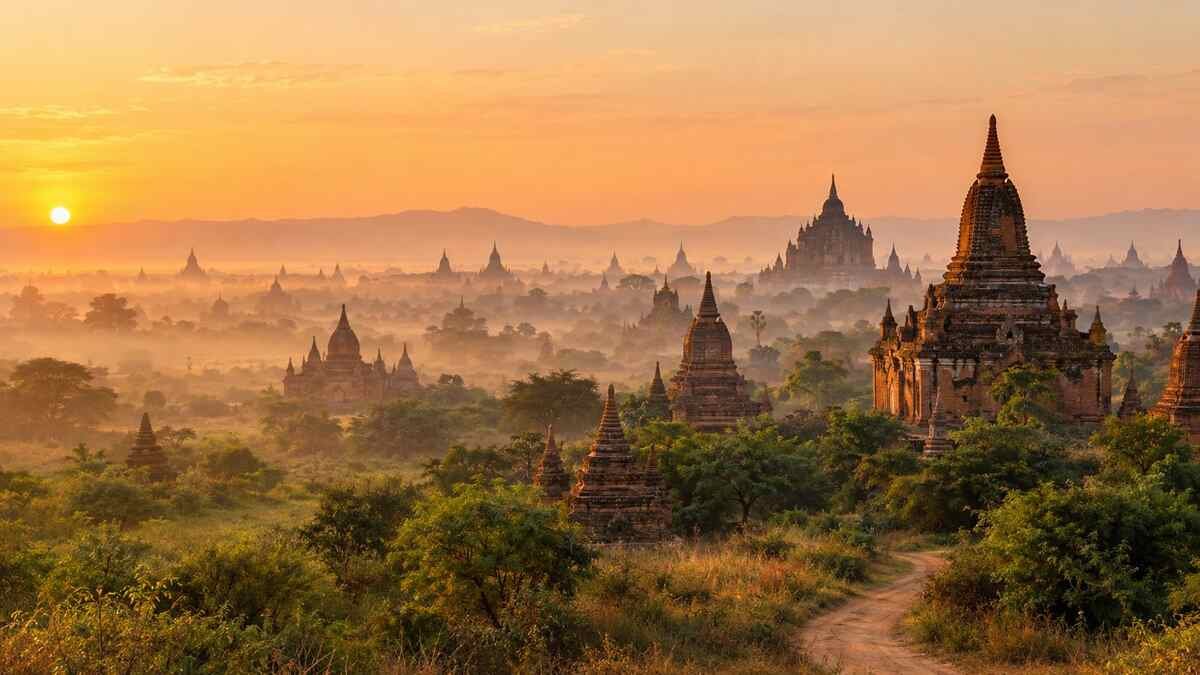
Bagan’s temple plain is the headline attraction, with some limits. Only about five or six major temples are open for climbing, and medical facilities are basic. The same source says serious cases need evacuation to Yangon or Bangkok. It also calls rented e-bikes on early-morning trails a bigger everyday hazard than the conflict.
Inle Lake
Inle Lake in Shan State is popular but close to conflict-affected areas. One tour operator advises staying updated on local conditions and flying in rather than using risky overland routes.
Mandalay
Mandalay remains on most itineraries, but the March 2025 earthquake left lasting damage. Myanmar lies in a seismically active zone, and Germany’s advisory notes the severe quake in March 2025. Expect some sites to be closed or under repair.
Areas Tourists Should Avoid or Visit With Extra Caution
This is the most important section for planning.
- Rakhine State: Reports conflict. A travel-restrictions guide says large parts of Rakhine are off limits, though Ngapali and its airport route were still reachable. The Irrawaddy reports that Ngapali Beach and Mrauk-U are under Arakan Army control. Treat Rakhine as off-limits unless an operator can show recent, official confirmation.
- Kachin, Shan, Karen, and Kayah States: These are described as active conflict zones with risks of landmines and violence.
- Official restricted areas: The Myanmar government keeps a growing online list of restricted areas. Checkpoints are common, and travelers without the right permission are turned back.
- Overland routes: Even between the four main hubs, flying is safer than long road journeys. Bagan and Inle Lake in particular call for flying to avoid risky overland routes.
Landmines, airstrikes, checkpoints, and sudden road closures can disrupt a short trip. Leave slack in your schedule and avoid tight connections.
Travel Advisories From the US, UK and Australia
Where the main governments stand:
- United States: Level 4, Do Not Travel, citing civil unrest, armed conflict, and arbitrary enforcement of local laws.
- United Kingdom: The FCDO advises against all travel and all but essential travel to parts of Myanmar. The UK is more region-specific than most, so read its map closely.
- Australia: An advisory aggregator lists Smartraveller at Level 4, Do Not Travel, updated April 7, 2026.
- Canada: The same aggregator notes that embassy officials need regime permission to travel outside Yangon.
That last point matters because consular help is very limited. Insurers also often exclude countries under “do not travel” advisories, so read your policy before relying on it.
Visa, e-Visa and Entry Requirements for Tourists
Most nationalities need a visa before arrival, and the e-Visa is the standard route:
- Cost and stay: The official fee page lists the tourist visa at US$50 for 28 days.
- Processing: E-visas are issued within three working days.
- Where to apply: evisa.moip.gov.mm. Third-party sites charge US$80 to US$150 for the same application. Pay extra only if you want someone to handle the form for you.
- Passport and ticket: One entry-requirements checker lists six months of passport validity and a return or onward ticket for UAE passport holders. Check the rule for your own nationality.
Fees and validity periods are reported inconsistently across guides, so rely on the official portal. Apply well before departure and carry a printed copy of your approval.
Flights, Airports and How to Get Around Safely
Getting in is the easy part. Yangon airport handles about 46 flights a day, with Bangkok the busiest route at around 11 daily and Singapore about six. Carriers include Myanmar Airways International, Thai Airways, Singapore Airlines, and China Southern.
A typical trip looks like this:
- Fly into Yangon, usually via Bangkok or Singapore.
- Take domestic flights to Mandalay, Bagan, or Heho for Inle Lake.
- Stay in a registered hotel in each hub.
Plan for infrastructure problems too. Analysts have flagged power supply and connectivity as major obstacles to tourism recovery. Expect outages and slower internet than you’re used to.
Hotels, Tour Operators and Travel Costs Right Now
Tourist numbers are low, so the main hubs have room. Arrivals are running at around 15% of pre-2021 levels. Flights are often the biggest expense. One 2026 fare guide puts Bangkok to Yangon economy at roughly $82 to $205, and Singapore to Yangon at roughly $123 to $301. Treat these as rough ranges.
When booking:
- Choose registered accommodation only. It’s the legal requirement and keeps your paperwork clean.
- Use an experienced local operator who can confirm current road and permit conditions.
- Get cancellation terms in writing, since itineraries can change at short notice.
There is also an ethical debate. Some travelers skip Myanmar on principle, and independent outlets such as The Irrawaddy have criticized events like the Mekong Tourism Forum for risking legitimizing military rule. Others argue that tourism money also reaches guides, drivers, and guesthouse owners. It’s worth thinking through before you book.
Safety, Insurance and Practical Tips Before You Go
- Insurance: Look for a policy that explicitly covers conflict zones and medical evacuation. Many standard policies don’t.
- Health: Medicines are scarce outside Yangon, so bring prescriptions, and drink bottled water.
- Crime: Germany’s advisory says property crime has risen because of the civil war’s economic and social effects. Take the usual precautions with valuables.
- Job-offer scams: Foreigners have been lured with offers of well-paid work, then forced to run online and phone fraud in “scam compounds.” If you receive an offer like this, don’t go.
- Conscription: There are indications that people subject to military service may not be allowed to leave the country. This matters most for dual nationals and people with Myanmar heritage.
- Before you fly: Register with your embassy, share your itinerary with someone at home, and keep emergency funds and a flexible return ticket.
Where to Follow Trusted Myanmar Tourism News Updates
Conditions change faster than guidebooks, so build a short list of sources:
- Official advisories: the US State Department, UK FCDO, Australia’s Smartraveller, and your own government’s page. Check them for changes, not just once.
- Independent Myanmar media: The Irrawaddy and Mizzima cover the security and political context.
- Travel trade press: TTG Asia and Travel Weekly Asia cover hotels, flights, and operator news.
- State media: Outlets such as the Global New Light of Myanmar report official visitor figures. Cross-check them against independent reporting.
- Visa portal: evisa.moip.gov.mm for entry rules.
When sources disagree, trust the more recent and more official one, and always check the publication date.
FAQs
Is Myanmar open to tourists in 2026?
Yes, in a limited way. Tourists can enter on a visa and visit approved areas, mainly Yangon, Bagan, Mandalay, and Inle Lake. Large parts of the country are restricted.
Is it safe to travel to Myanmar right now?
Most Western governments advise against it. The US rates Myanmar Level 4, Do Not Travel. Some visitors report calm conditions in the main tourist areas, but the situation can change without warning.
Which parts of Myanmar are open to tourists?
Yangon, Bagan, Mandalay, and Inle Lake are reported as open. Avoid border areas and conflict-affected states, including most of Rakhine, Kachin, Kayah, and parts of Shan and Chin.
Do I need a visa for Myanmar, and how much does it cost?
Most travelers do. The official e-Visa costs US$50 for a 28-day stay. Third-party sites may charge US$80 to US$150.
Can I get a visa on arrival?
For most nationalities, no. A trial scheme covers travelers from China and India and runs to August 29, 2027.
What is the best way to get around Myanmar?
Domestic flights. Overland routes carry higher risk from conflict, checkpoints, and landmines.
Will travel insurance cover me?
Possibly, but check carefully. Many insurers exclude countries under “do not travel” advisories. Choose a policy that explicitly covers Myanmar, conflict-related disruption, and medical evacuation.
Conclusion
Following Myanmar tourism news shows a country that is open on paper but divided in practice. The main circuit of Yangon, Bagan, Mandalay, and Inle Lake is accessible, flights are running, and arrivals are slowly growing. Governments still warn against travel, large regions are off limits, and conditions can change quickly.
If you decide to go, apply through the official e-Visa portal, buy insurance that covers conflict-related risks, stay in registered accommodation, and fly between hubs. Check the advisories again just before you leave.