You land on a website you have never heard of and wonder whether you can trust it. That is a common question about domikyo.com, a lesser-known site that some online articles describe as a smart home and home networking resource.
No one can label a website safe or fake from a hunch, so you have to check. This guide shows how to verify domikyo.com, or any unfamiliar site, in about fifteen minutes using free tools. You will look at domain details, security signals, policies, scanner results, and what real users say.
What Is Domikyo.com and What Does the Website Offer?
Third-party articles describe domikyo.com as a platform that combines smart home technology with home networking advice, such as Wi-Fi setup, device compatibility, and everyday automation tips.
Treat that as a starting point, not proof. A site can describe itself any way it likes, and a few blog posts mentioning a domain do not confirm who runs it. What counts is whether the content, ownership details, and track record hold up when you look closely.
As you read on, keep one question in mind: does what the site says about itself match what you can verify elsewhere?
Quick Answer: Is This Site Safe to Visit?
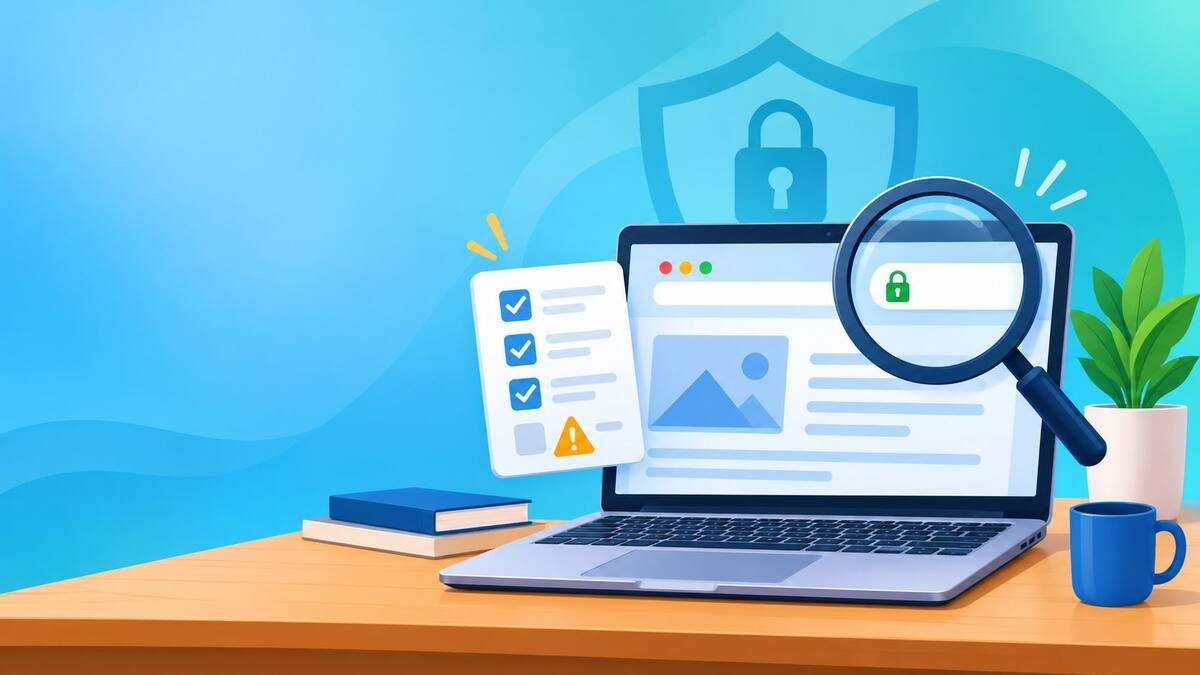
A site is reasonably safe to browse when it passes most of these checks:
- Working HTTPS and no browser security warnings
- No malware or phishing flags from safety scanners
- A real business or author name and working contact details
- Clear privacy and terms pages
- No reports of scams or complaints from independent users or search results
A site that fails several of these deserves caution. A site that fails the scanner check, or asks for money or personal data without any of the above, should be avoided entirely.
Opening a page is rarely dangerous on an updated browser. The real risk starts when you download files, enter passwords, or share payment details. The sections below explain how to check each point.
Check the Domain Age and WHOIS Registration Details
Every website sits on a registered domain, and that registration leaves a trail. Search the domain with the free ICANN Lookup tool and look at three things:
- Creation date: How old is the domain? A domain registered a few weeks ago is not automatically bad, but scam sites are often young.
- Registrar: Is it a recognized registrar, such as GoDaddy, Namecheap, or Cloudflare?
- Registrant info: Many owners hide personal details behind privacy protection. That is common, so do not treat it as a red flag on its own.
A domain that has existed for years, renews regularly, and has a steady history looks better than one that appeared last month. Still, age alone proves nothing. Old domains get hijacked, and new ones can be perfectly honest. Use age as one clue among several.
Verify the SSL Certificate and HTTPS Security
Check the address bar. If the URL starts with https:// and shows a padlock, the connection between your browser and the site is encrypted.
That is useful but often misunderstood. Free certificates are easy to get, so scam sites use HTTPS too. The padlock means your data travels privately. It does not mean the owner is trustworthy.
To check the certificate:
- Click the padlock and open the certificate details.
- Confirm the certificate was issued to the same domain you are visiting.
- Make sure your browser shows no “Not secure” or certificate error warning.
If your browser shows a full-page warning, stop. Do not click through it just to see what is on the other side.
Look for Contact Details, an About Page, and Policies
Legitimate websites usually leave a paper trail. Scroll to the footer and click around. Good signs include:
- An About page that names real people or a registered company, not vague marketing language
- A working contact method, such as a business email on the same domain, a responsive contact form, or a physical address
- A privacy policy that explains what data is collected and why
- Terms of use and, if the site sells anything, a clear refund or return policy
Send a short test message through the contact form or email. A real site tends to reply, even if slowly. Total silence, bounced emails, or a free webmail address on a site that claims to be a company are worth noting.
Also check whether the policy pages look copied. Paste a distinctive sentence from the privacy policy into Google in quotation marks. If the exact text appears on dozens of unrelated sites, it is boilerplate. That is not damning, but a site with only copied pages and no original details gives you little to trust.
Red Flags: Fake Reviews, Pop-Ups, and Odd Redirects
Pay attention to how the site behaves while you browse. Some warning signs are easy to spot once you know them.
Behavior red flags
- Pop-ups claiming your device is infected or that you won a prize
- Automatic redirects to unrelated sites
- Pressure tactics, such as countdown timers or “only 2 left” messages with no real stock
- Requests to download software just to view content
Content red flags
- Testimonials with stock photos and no last names
- Dozens of five-star reviews written in the same style
- Articles full of broken grammar or oddly repetitive wording
- Claims that sound too good to be true, such as huge discounts or guaranteed results
One odd detail is not a verdict. Several together form a pattern, and patterns are what you should trust.
How to Test Domikyo.com With Free Safety Scanners
Scanners give you an objective second opinion. Paste the web address into these free tools and compare the results:
- Google Safe Browsing site status: Google’s Transparency Report shows whether the site has been flagged for malware or phishing.
- VirusTotal: Runs the URL through dozens of security engines at once. One or two obscure flags can be false alarms, but many flags from major vendors are serious.
- URLVoid: Checks the domain against several reputation lists.
- Sucuri SiteCheck: Scans for malware, blacklisting, and known site vulnerabilities.
- ScamAdviser or similar trust-score sites: Useful as a rough signal, but treat the score as one input, since these tools sometimes mis-rate new or small sites.
Run at least two or three and note what each says. If you are publishing a review, include screenshots and the date you ran each test. Results change over time, and dated evidence is far more credible than a vague claim.
Check Reputation: What Users and Search Results Say
Tools show technical signals. People show real experience. Search Google for the domain name plus words like “reviews,” “scam,” or “complaints,” then look beyond the first result:
- Reddit and forums: Real users often share unfiltered experiences.
- Trustpilot and similar review sites: Read the negative reviews first and look for repeating details, not just star ratings.
- Social media: Check whether the site has active profiles with real engagement or just empty accounts.
Two cautions apply. A lack of reviews is not a bad sign for a small or new site. It just means there is less to go on. Also, some “review” articles are paid promotions or auto-generated pages. If a post praises a site without showing any evidence of real testing, give it little weight.
Does the Site Show Real Expertise?
For an information site, content is the product. Strong content usually has:
- Specific, accurate details instead of generic advice
- Named authors with a visible background
- First-hand examples, such as photos, test results, or step-by-step setups
- Sources or links for technical claims
- A clear update date
For a smart home and networking site, test the advice. If a guide recommends a router setting or a device, search for the same advice on trusted sources. Accurate technical content is hard to fake across many articles, so spot-checking a few pages tells you a lot.
Be wary of pages that repeat the same phrases, stuff in the site name, and say little. That style often signals content written for search engines rather than readers.
Is It Safe to Share Personal Data or Make Payments?
Reading a site and trusting it with your information are two different levels of risk. If you are only reading, the main threats are drive-by downloads and misleading pop-ups, and an updated browser handles most of that. If the site asks for more, slow down:
- Email signup: Use a secondary email address first.
- Account creation: Never reuse a password you use elsewhere.
- Payments: Pay by credit card or PayPal, which offer dispute options. Avoid wire transfers, crypto, and gift cards, which are hard or impossible to reverse.
- Sensitive data: A home tech information site has no reason to ask for your ID, bank login, or one-time security codes. If it does, leave.
A useful rule: the more a site asks of you, the more proof it should have earned first.
What to Do If You Visited a Suspicious Website
Visiting a page is usually harmless. What you did while there matters more.
If you only browsed:
- Close the tab and clear your browser cache.
- Make sure your browser and operating system are fully updated.
- Run a scan with your antivirus tool.
If you downloaded something or entered information:
- Do not open the downloaded file. Delete it and run a full malware scan.
- Change the password for any account you entered, and anywhere you reused it.
- Turn on two-factor authentication on important accounts.
- If you entered card details, contact your bank about blocking or replacing the card.
- Watch your accounts and email for unusual activity over the next few weeks.
If you believe you were scammed, report the site to your local cybercrime authority and to Google through its Safe Browsing reporting page.
FAQs
Is domikyo.com a scam?
You can only tell by checking. Run the domain through Google Safe Browsing, VirusTotal, and a WHOIS lookup, then compare the results with the red flags above. If scanners show no warnings and the site has real contact details and quality content, a scam is unlikely. If not, treat it with caution.
Who owns domikyo.com?
Check the registration through ICANN Lookup. Many owners use privacy protection, so the details may be hidden, which is common and not suspicious on its own. Also look for a named person or company on the site’s About page and policies.
Is it safe to open the website on my phone?
Generally yes, if your browser and system are updated. The risk comes from downloading apps or files, tapping suspicious pop-ups, or entering personal details. Do not install anything the site prompts you to download.
Does a padlock mean a website is safe?
No. The padlock only means the connection is encrypted. Scam sites can get the same certificate for free, so check the other signs too.
How old should a domain be to look trustworthy?
There is no fixed number. A domain that has existed for a year or more with consistent content and no complaints looks stronger than a recent one, but judge age together with reputation and behavior.
What if safety scanners disagree?
Look at who flagged the site. One flag from an obscure engine is often a false positive. Flags from major vendors or Google Safe Browsing deserve to be taken seriously, so lean toward caution.
Final Verdict: Should You Trust Domikyo.com?
Here is how to turn your research into a decision about domikyo.com:
- Mostly green: The domain has some history, scanners show nothing, ownership and contact details are real, and the content shows genuine knowledge. It is reasonable to browse and read.
- Mixed results: Some signals are good and some are missing, such as hidden owner details on a very new domain. Use the site for reading only and hold back on sharing personal data.
- Mostly red: Scanner flags, fake-looking reviews, no real contact information, or requests for sensitive data. Leave the site and do not return.
The method matters more than any single verdict. Websites change owners, get hacked, and improve over time, so a check you run today may not hold next year. Repeat these steps before you give an unfamiliar site your money or your details.
You may also read: Is alertsquora com Safe? How to Check Before You Click