Your favorite butter squishy used to puff back up slowly after every squeeze. Now it just sits there flat. Before you throw it out, know that most flat squishies are not dead. They are usually compressed, dirty, dried out, or leaking air, and each cause has its own fix.
Quick answer: Clean the squishy, squeeze and release it slowly 10 to 15 times, then rest it somewhere flat and shaded. If it is still stiff, a short soak in lukewarm water followed by gentle kneading can soften foam types. Paper and taba squishies need different repairs, covered below.
This guide explains why squishies go flat, how to tell whether yours can be saved, and the safest ways to soften it again. It also covers sticky, torn, and misshapen squishies, plus how to keep them soft longer.
Why Does a Butter Squishy Go Flat Over Time?
A squishy is a soft, slow-rising toy. Its rise depends on the material inside holding its shape and trapping air. Knowing what damaged yours tells you which fix to try first.
The most common causes are:
- Constant compression: Squishies kept in a pocket, a crowded bag, or under other toys slowly lose their shape.
- Dirt, oils, and lotion: Oil from your hands builds up and makes the surface sticky or stiff.
- Drying out: Foam and gel-style squishies can harden in heat or direct sunlight.
- Age and wear: Even well-kept squishies lose some bounce after months of heavy squeezing.
- Small tears or leaks: If the outer layer is damaged, air escapes and the toy cannot rise properly.
How to Tell If a Flat Squishy Can Still Be Saved
Not every flat squishy is a lost cause, and a quick check saves time.
Your squishy is probably fixable if:
- It still rises a little, just very slowly
- It feels stiff or dense but has no cracks
- The surface is dusty, dirty, or sticky
- It was squashed in storage and kept the flattened shape
It may be too far gone if:
- The foam crumbles or flakes apart when pressed
- It has large tears with material falling out
- It has a strong smell that won’t go away
- It stays completely flat no matter how you handle it
If yours fits the first group, the steps below give it a real chance.
Materials You Need Before You Start the Repair
You don’t need anything fancy:
- A bowl of lukewarm water, comfortably warm to the touch and never hot
- Mild soap or baby shampoo
- A clean towel or paper towels
- Cornstarch or baby powder
- Clear tape or a small amount of craft glue for tears
- A soft cloth and a shaded spot away from direct sunlight for drying
Always test any method on a small, hidden area first. Squishies are made from different materials, and what softens one can damage another.
How to Revive a Flat Butter Squishy Step by Step
This general method works for most foam-style squishies and is the best place to start.
Step 1: Clean the surface
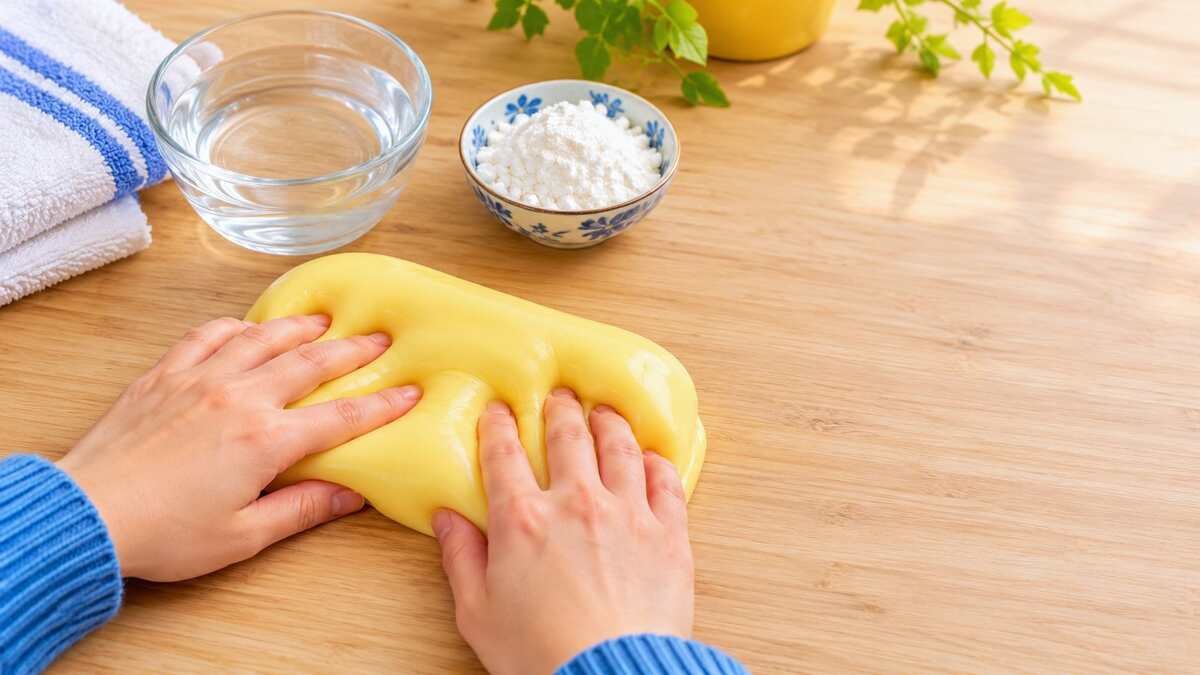
Wipe the squishy with a damp cloth and a tiny drop of mild soap. Removing oils and dust often restores some softness on its own.
Step 2: Squeeze and release slowly
Press gently with your fingers, then let go and give it a few seconds to rise. Repeat 10 to 15 times. This loosens compressed material and helps air move back in.
Step 3: Gently reshape it
If one side is flattened, hold the squishy in its original shape for a minute or two. Don’t pull or stretch hard, since that can cause tears.
Step 4: Let it rest
Leave it somewhere flat, dry, and shaded for several hours. Many squishies keep improving after you leave them alone.
If it still feels stiff, try the warm water method next.
How to Soften a Stiff Squishy With Warm Water
Warmth makes soft materials more flexible, which is why this is one of the most popular fixes for a stiff squishy.
- Fill a bowl with lukewarm water.
- Place the squishy in the water for a few minutes. Keep the soak brief.
- Take it out and press out the excess water with a towel. Don’t wring it.
- Knead it softly with your fingers for a minute or two.
- Let it air dry completely, away from sunlight and heaters.
Don’t use boiling water, a microwave, or a hairdryer on high heat. Too much heat can warp the shape, damage paint or print, or make the material brittle. Results also vary, since some foam squishies bounce back well after this treatment and others improve only a little.
How to Fix Foam, Paper, and Taba Squishies
The right repair depends on what your squishy is made of. If you’re not sure which type you have, check how it was made or sold, and start with the gentlest methods.
Foam squishies
These are the most common store-bought type. The cleaning, squeezing, and lukewarm water methods above work best here. Make sure the foam is fully dry before storing it, because trapped moisture can cause odors.
Paper squishies
A paper squishy is usually made from paper or cardboard covered in tape, often with a sponge inside. When it goes flat, the sponge is usually the problem. Carefully open one edge, replace or fluff the sponge, and reseal with fresh tape. Avoid water, which will ruin the paper.
Taba squishies
Taba squishies usually have a silicone-style gel or tape filling in a flexible shell. They tend to flatten when air escapes or the outer layer gets sticky. Check for small holes and patch them with a thin layer of clear tape. Don’t soak them. If the gel itself has dried out, replacing the filling is often the only real solution.
How to Fix a Sticky, Torn, or Misshapen Squishy
Sometimes a squishy isn’t flat so much as damaged. These quick fixes cover the most common problems:
- Sticky surface: Wipe with a damp cloth and mild soap, dry it fully, then dust lightly with cornstarch or baby powder. Shake off the extra.
- Small tear: Pinch the edges together and seal with clear tape or a tiny dab of craft glue. Let it dry fully before squeezing.
- Misshapen or dented: Warm it briefly in your hands, reshape it, and hold it in position for a few minutes.
- Dusty or fuzzy: Use a lint roller or a soft damp cloth, then dry thoroughly.
Keep repairs small. Large rips usually keep tearing no matter how well you patch them.
Common Mistakes That Can Ruin the Texture for Good
Some well-meant fixes do more harm than good. Avoid these:
- Hot water, microwaves, or heaters: Heat can shrink, harden, or melt the material.
- Soaking too long: Extended soaking breaks down foam and can leave it smelly.
- Pulling and stretching hard: This creates tears and permanent weak spots.
- Storing it damp: Moisture leads to mildew and odor.
- Strong cleaners or alcohol: These can strip paint and dry out the surface.
- Skipping the test spot: Always try a new method on a small area first.
If something starts to go wrong, stop right away. A slightly stiff squishy is easier to save than one that has been overtreated.
Storage and Care Tips to Keep Your Squishy Soft
Good habits keep a squishy soft far longer than any repair.
- Store it flat in a small box or container, not under heavy items.
- Keep it away from direct sunlight, hot cars, and radiators.
- Wash your hands before playing to cut down on oil and dirt.
- Rotate between a few squishies so none gets worn out.
- Keep small children away from a torn squishy, since loose pieces can be a choking hazard. Keep pets away from it too.
When to Replace a Butter Squishy Instead of Fixing It
Sometimes replacing it is the honest answer. Consider a new butter squishy if:
- The material is crumbling or coming apart
- It smells bad even after cleaning and drying
- It has large tears or leaking filling
- You’ve tried the safe fixes and it still won’t rise
If you like crafting, a worn-out squishy is a good excuse to make a fresh paper or taba version, which is often cheaper than buying a new one.
FAQs
Why is my squishy not rising anymore?
Usually it is compressed, dirty, dried out, or damaged. Cleaning it and squeezing it gently often helps, and lukewarm water can help foam types.
Can you make a flat squishy soft again?
Often, yes. Mild cases respond well to cleaning, kneading, and a short lukewarm soak. Badly torn or crumbling squishies usually can’t be saved.
Is it safe to put a squishy in warm water?
Brief contact with lukewarm water is generally fine for foam squishies. Avoid hot water, and don’t soak paper or taba squishies.
Can I microwave a squishy to soften it?
No. Microwaving can melt or warp the material and may be unsafe.
How do I make a sticky squishy less sticky?
Clean it gently, dry it fully, and dust it lightly with cornstarch or baby powder.
How long do squishies last?
There is no fixed lifespan. With good storage and gentle use, many last for months or longer, but heavy squeezing wears them out faster.
Are squishies safe for kids?
Most are made for children, but check the age label. Supervise young kids, and throw away squishies that are torn or crumbling.
Conclusion
A flat squishy isn’t always the end of the road. Start with the gentlest steps: clean it, squeeze it slowly, and give it time to rest. If your butter squishy is still stiff, try a short lukewarm soak and match the repair to the type of squishy you have. Avoid heat and hard pulling, and test each method on a small spot first.
Be gentle, be patient, and know when it’s time to replace it. Do that, and your squishy will stay soft far longer.