Search “doff cleaning” and you’ll find plenty of pages assuming you already know what it means, or product listings trying to sell you a bottle without any real explanation. Doff cleaning is a specific method for removing moss, algae, lichen and grime from stone, brick and render, usually without any chemical biocide. This guide covers how it works, what it costs, whether it’s safe for your property, and how it compares to pressure washing.
What Is Doff Cleaning?
Doff cleaning refers to a low-pressure, superheated steam system originally developed by Stonehealth, a UK company specializing in masonry restoration. The name has become so widely used that people now say “doff cleaning” the way they’d say “Hoover” instead of “vacuum.”
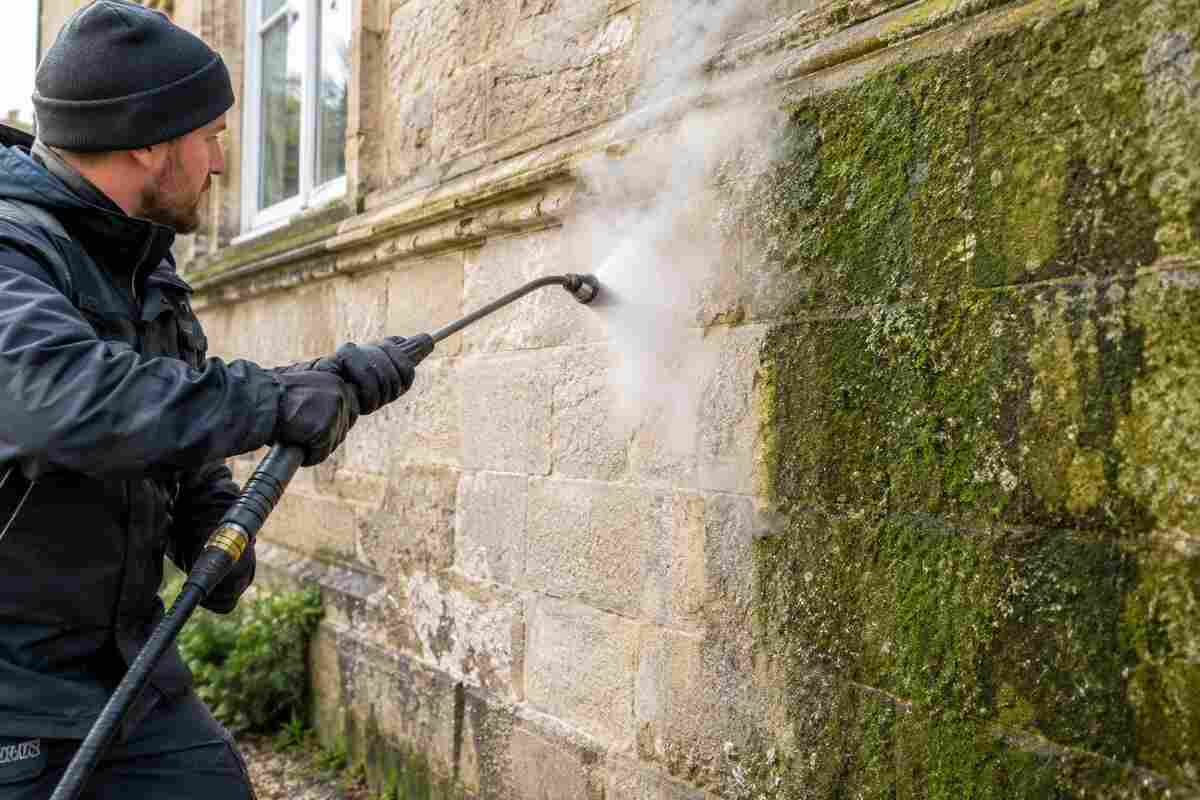
A DOFF machine heats water to temperatures as high as 150°C and applies it at very low pressure. That combination of heat and gentle water flow breaks down biological growth without eroding the surface underneath.
It’s commonly used on:
- Historic buildings and listed properties
- Sandstone, limestone and brick facades
- Patios, paths and driveways
- Roof tiles and render
You may also see “Doff” as the name of a branded outdoor cleaning fluid sold for DIY use on patios and garden furniture. That’s a different product: a chemical treatment rather than a steam system. We’ll cover the difference below.
How the Steam Cleaning Process Works
A DOFF machine connects to a standard water supply and heats the water in an internal hot-box. That heated water is released through a lance at low pressure, typically under 300 psi, compared to over 3,000 psi for many domestic pressure washers.
On the surface, three things happen:
- Heat kills organic matter like algae, moss spores and lichen.
- Low-pressure application loosens dirt and residue without damaging mortar joints or soft stone.
- The dead organic material rinses away, leaving the surface clean but structurally intact.
Because there’s no aggressive mechanical force involved, conservation officers and heritage bodies often recommend or require this method for protected buildings.
Which Surfaces Can Be Treated Safely
Generally safe for:
- Natural stone (sandstone, limestone, granite)
- Brickwork
- Render and pebbledash
- Concrete patios and paving
- Roof tiles (slate and concrete)
Requires caution or isn’t recommended for:
- Painted surfaces, since high heat can cause blistering
- Very soft or already-crumbling stone
- Surfaces with existing structural damage
A good contractor tests a small, inconspicuous patch before treating the full surface. If someone skips this step on a large job, it’s worth asking why.
How It Removes Moss, Algae and Lichen
Moss, algae and lichen aren’t only a cosmetic issue. They trap moisture against a surface, which can speed up decay in porous stone and brick.
The heat affects each type of growth differently:
- Algae and moss are mostly water, so intense heat kills them almost instantly.
- Lichen bonds more tightly to the surface and may need a second pass.
- General grime and pollution staining responds well to heat and rinsing, even without a chemical additive.
This method kills the organism but doesn’t stop regrowth. A wall in constant shade and damp will likely need cleaning again within a year or two. That’s routine maintenance, not a flaw in the method.
Is Doff Cleaning Safe for Old or Listed Buildings?
Yes. This is often the preferred method for exactly these buildings and is frequently specified in conservation guidance.
The reason is the absence of harsh chemicals and abrasive pressure. Sandblasting or high-pressure washing can strip the weathered surface, or patina, from old stone. That damage is often irreversible and can accelerate decay. Low-pressure steam avoids this while still lifting biological growth and surface dirt.
Still, a few things matter for older or listed buildings:
- The contractor should have specific experience with heritage masonry, not just general exterior cleaning
- Some local conservation authorities require written approval before cleaning work on listed structures
- Lime mortar, common in older buildings, needs gentler handling than modern cement-based mortar
If your property is listed, check Historic England’s advice service or your local conservation officer before booking any cleaning work.
What Affects Doff Cleaning Cost
Pricing depends on several factors, so there’s no single number that applies to every job:
- Surface area – priced per square metre in most cases
- Level of biological growth – heavy, established moss or algae takes longer to remove than light staining
- Access – ground-floor patios cost less than upper-storey walls requiring scaffolding or a cherry picker
- Surface type – heritage stonework often needs slower, more careful work than a standard driveway
- Location – labour costs and contractor availability vary by region
Small residential jobs like a patio or path sit at the lower end. Full building facades, especially those needing access equipment, cost significantly more. Getting two or three quotes is worth the time, since pricing can vary a lot between contractors offering the same service.
DIY Cleaning vs Hiring a Specialist
DIY works well if:
- You’re treating a small patio, path or garden furniture
- You’re using a branded cleaning fluid with a standard hose or pressure washer
- The surface is durable and not heritage listed
A specialist makes more sense if:
- You need the actual steam system, which requires equipment most homeowners can’t easily hire
- You’re treating a full building exterior or roof
- The property is old, listed, or has delicate stonework
- Access equipment like scaffolding is needed
True DOFF steam cleaning is a professional service. The machines are heavy, expensive, and require training to use safely at those temperatures. For anything larger than a patio, hiring a contractor is usually the more practical choice.
Doff Cleaning vs Pressure Washing and Chemical Treatments
Vs. pressure washing:
Pressure washers rely on high mechanical force, which can erode soft stone, damage mortar joints, and push water into cracks. Steam cleaning relies on heat instead of force, which is gentler but can take slightly longer.
Vs. chemical treatments:
Chemical biocides kill moss and algae effectively but leave residue that needs rinsing, and they’re not always suitable near plants, ponds or waterways. Steam cleaning uses only water, making it a better option in sensitive areas, though it typically costs more upfront due to the equipment involved.
None of these methods is universally “better.” The right choice depends on your surface, budget, and how cautious you need to be with the material.
How Long the Results Last
Results typically last one to three years, depending on:
- How shaded and damp the surface is (north-facing walls regrow moss faster)
- Local climate and rainfall
- Whether a preventative treatment was applied afterward
- The surface material, since porous stone attracts regrowth faster than dense concrete
Some contractors offer an optional biocide application after cleaning to slow regrowth without leaving a strong residue. It’s a reasonable add-on if you want longer-lasting results, particularly in shaded or damp areas.
How to Choose a Reliable Doff Cleaning Company
Not every contractor offering this service has the same level of experience. Worth checking before you book:
- Insurance and accreditation – public liability insurance matters, especially for work at height
- Portfolio of previous work – photos of similar jobs, including heritage or listed buildings if relevant
- Experience with your surface type – a contractor skilled with modern brick may not have the same expertise with fragile sandstone
- Clear, itemized quotes – vague pricing is a red flag
- Verifiable local reviews – not just testimonials on their own site
A short phone call asking how they handle test patches, or what they do differently for older buildings, usually tells you how experienced a company really is.
FAQs
Is doff cleaning the same as pressure washing?
No. Doff cleaning uses high heat at low pressure, while pressure washing uses high mechanical force. They can look similar in results, but doff cleaning is gentler on delicate surfaces.
Does doff cleaning use chemicals?
Not typically. The core method uses heat and water only. Some contractors add an optional biocide treatment afterward to slow regrowth, but it’s not required.
Can I doff clean my house myself?
Not with the true steam system, since the equipment isn’t commonly available for hire. You can get a similar, less powerful result on smaller surfaces using a branded cleaning fluid with a standard pressure washer.
Is doff cleaning safe for render and painted surfaces?
It’s generally safe for bare render, but painted surfaces can blister under high heat. A test patch is recommended first.
How often should a property be doff cleaned?
Most properties need treatment every one to three years, depending on shade, moisture and how much biological growth builds up.
Conclusion
Doff cleaning is a heat-based steam method for removing moss, algae and grime from stone, brick and render without harsh chemicals or abrasive pressure. It’s particularly useful for older or listed buildings, where gentler methods matter, but works just as well on modern patios and driveways.
Whether you handle a small patio yourself with a cleaning fluid, or hire a specialist for a full building exterior, understanding how the process works and what drives the cost helps you get results that actually last.