If you’ve been shopping for an air purifier or a new cooker hood, you’ve likely come across the term “eco plasma” and wondered what it actually does inside your home. It’s marketed as a health upgrade, but there’s surprisingly little clear, evidence-based information explaining what’s really happening in the air when one of these systems is running.
This article explains what eco plasma technology is, how it works, and what the science actually says about its safety, so you can make an informed decision rather than relying on marketing claims alone.
What Is Eco Plasma and How Does It Work?
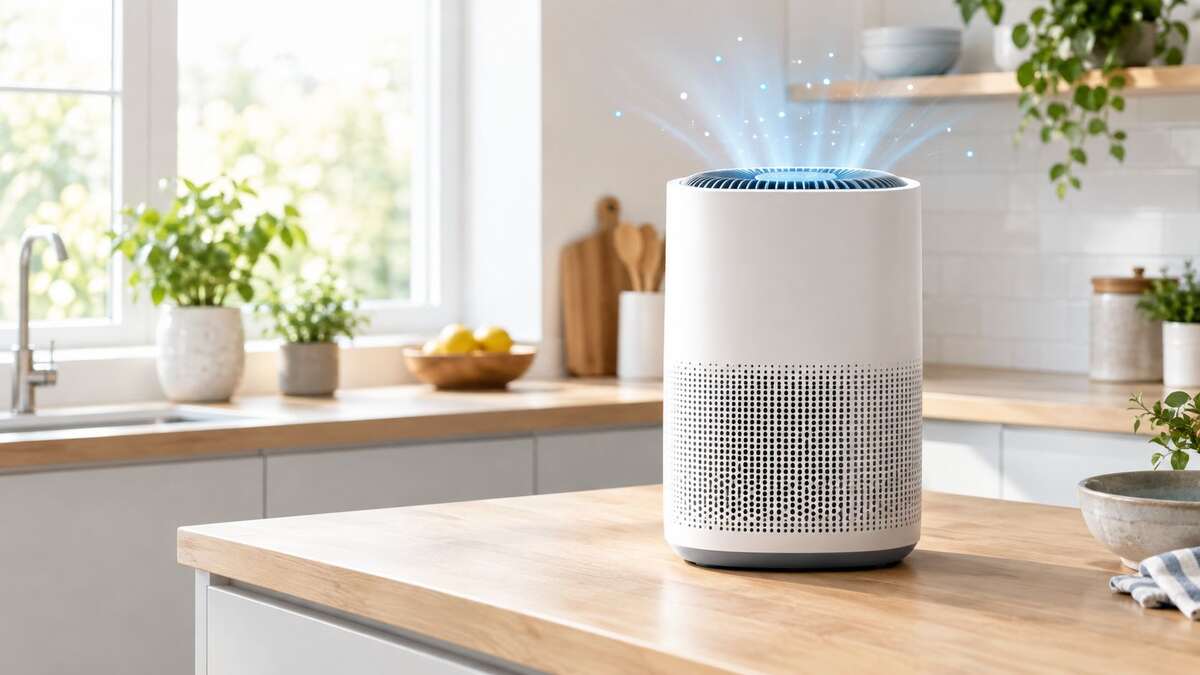
Eco plasma is a type of ionisation technology used in air purifiers and, more recently, in kitchen extractor hoods. Instead of relying only on physical filters to catch particles, it uses an electrical charge to split air molecules into ions.
The process works like this:
- The device generates positive and negative ions, similar to those found near waterfalls, forests, or after a storm.
- These ions attach to airborne particles such as dust, bacteria, and odour molecules.
- Once charged, the particles clump together and become heavier, causing them to settle out of the air or get trapped more easily by a filter.
Some systems also use ionisation to neutralise odours directly and disrupt the outer membrane of certain bacteria and viruses, which is the basis for many disinfection claims.
The “eco” label typically refers to energy efficiency and the absence of added chemicals. The system runs on electricity and air alone, with no sprays or consumable chemical filters required.
The Science Behind Plasma Ionisation Technology
Plasma, in this context, isn’t the glowing gas often pictured in science fiction. It’s a low-temperature, non-thermal plasma, sometimes called cold plasma or bipolar ionisation, that ionises passing air without heating it.
There are two main types used commercially:
- Bipolar ionisation – releases both positive and negative ions and is the more common method in modern air purifiers and extractor hoods.
- Corona discharge ionisation – an older technique that tends to produce more ozone, which is why it’s less common in newer consumer devices.
This distinction matters, because it’s directly tied to the biggest safety concern surrounding this technology: ozone.
Does Eco Plasma Produce Harmful Ozone Levels?
This concern is backed by genuine regulatory scrutiny, not just online speculation.
Ozone can form as a byproduct of air ionisation, and at high concentrations it’s a recognised respiratory irritant. This concern is closely related to what the EPA has documented about ozone generators marketed as air cleaners — a related category of device where ozone output is the core mechanism rather than a side effect, but the underlying health risk from ozone exposure is the same.
Not all ionisers carry the same risk:
- Well-designed bipolar systems are engineered to keep ozone output at or near zero, often certified under UL 2998 (Zero Ozone Emissions) or similar standards.
- Older or poorly regulated ionisers, especially corona-discharge types, are more likely to produce measurable ozone.
- Ozone output tends to rise with device age, poor maintenance, or continuous use at maximum settings.
The practical takeaway: check for third-party ozone certification before buying, rather than trusting “eco” or “safe” labels on the packaging alone.
What Studies Say About Ioniser Safety and Air Quality
Independent research on ionisation is still catching up to how quickly the technology is being marketed, but there’s a reasonable body of evidence to consider.
Several controlled studies on bipolar ionisation show it can reduce airborne bacteria, certain viral particles, and some volatile organic compounds under lab conditions. This is part of why the technology gained popularity during heightened attention to indoor air quality.
At the same time, independent researchers have raised valid concerns:
- Real-world performance often falls short of lab results, since room size, airflow, and ventilation heavily affect how well ions reach and neutralise particles.
- Ionisation can sometimes produce unintended secondary pollutants when ions react with other compounds already in the air.
- Long-term, large-scale human health studies specific to ionisers remain limited compared to established methods like HEPA filtration.
The technology isn’t a myth, but it’s also not a guaranteed fix. Manufacturer performance claims are a starting point, not the final word.
Potential Health Benefits of Plasma Air Purification
When it works as intended, eco plasma offers some genuine advantages:
- Odour reduction – especially useful in kitchens, where cooking smells are a common complaint with standard extractor hoods.
- Reduced airborne particles – including some allergens, dust, and microbial particles.
- No consumable chemicals – no cartridges or sprays to replace.
- Low energy use – most systems run continuously without a major impact on electricity bills.
- Complements existing filtration – many systems work alongside HEPA or carbon filters rather than replacing them.
These benefits are most noticeable in enclosed spaces with consistent airflow, such as a kitchen with a properly fitted extractor hood, rather than large open-plan rooms.
Possible Side Effects and Health Risks to Consider
Even a well-designed system carries some risks worth knowing:
- Ozone exposure – the main concern, particularly with lower-quality or poorly maintained devices.
- Irritation in sensitive individuals – people with asthma or other respiratory conditions may react more strongly to even low ozone levels.
- False sense of security – relying solely on ionisation instead of proper ventilation or filter maintenance can reduce overall air quality over time.
- Secondary particle formation – in rare cases, ionised particles can bond with other pollutants and form new compounds instead of eliminating them.
This doesn’t make the technology inherently dangerous. It means it needs to be used correctly, in a well-ventilated space, ideally with a certified low-ozone unit.
Who Should Use Caution With Ionisers
Some groups should be more careful before relying on plasma ionisation as their main air purification method:
- People with asthma, COPD, or other chronic respiratory conditions
- Pregnant women, as a general precaution given limited long-term research
- Households with infants or very young children
- Anyone in a poorly ventilated space, such as a small room without windows
If you fall into one of these groups, speak with a healthcare provider before making an ioniser your primary air quality solution, and prioritise devices with verified zero-ozone certification.
Eco Plasma vs Traditional Air Purifiers: A Safety Comparison
Here’s how eco plasma compares to more established purification methods:
| Feature | Eco Plasma (Ionisation) | HEPA Filtration | Activated Carbon |
| Removes fine particles | Partially, via clumping | Yes, physically trapped | Limited |
| Removes odours | Yes, effectively | No | Yes, effectively |
| Ozone risk | Possible if uncertified | None | None |
| Maintenance | Low | Moderate (filter changes) | Moderate (filter changes) |
| Best for | Odours, light particles | Allergens, dust, smoke | Odours, gases, chemicals |
Eco plasma isn’t necessarily better or worse than HEPA; it works differently. Many of the best-performing modern systems combine ionisation with HEPA or carbon filtration to cover each other’s gaps.
How Regulatory Bodies View Plasma Ionisation Devices
Regulation in this space is still developing, but a few points are worth knowing:
- In the U.S., the EPA does not endorse ion-generating air cleaners as a proven way to reduce indoor air pollutants to safe levels, and specifically cautions against ozone-generating devices marketed as air purifiers.
- Independent certification bodies like UL offer testing standards (UL 2998) confirming a device produces zero ozone emissions. This is the clearest safety signal available to consumers.
- The EU and UK generally regulate these devices under broader electrical safety and appliance standards rather than air-quality-specific certification, placing the burden on manufacturers to self-report ozone data.
Certification matters more than marketing copy. If a brand can’t point to independent ozone safety certification, treat that as a red flag.
Is Eco Plasma Safe for Daily Home Use?
Based on the available evidence, eco plasma technology is generally safe for most people when it comes from a reputable brand, carries proper zero-ozone certification, and is used in a reasonably ventilated space. It’s not a miracle solution, and it’s not something to fear either. It sits in a middle ground that depends heavily on the specific product and how it’s used.
Before buying, look for:
- Independent zero-ozone certification (such as UL 2998)
- Clear technical specifications, not just marketing claims
- Reviews or lab test data, not only brand-published statistics
- Compatibility with proper ventilation in your space
Frequently Asked Questions
Is eco plasma technology bad for your health?
Not inherently. Reputable, certified low-ozone systems are generally considered safe for most healthy adults. Risk increases mainly with uncertified devices or poor ventilation.
Does eco plasma produce ozone?
Some ionisation systems can produce trace ozone, especially older or lower-quality units. Look for zero-ozone certification, such as UL 2998, to minimise this risk.
Can eco plasma replace a HEPA filter?
Not entirely. Eco plasma handles odours and light particles well, while HEPA filters are more effective at trapping fine dust, allergens, and smoke. Many modern systems combine both.
Is eco plasma safe for people with asthma?
It can be, with caution. People with asthma or other respiratory conditions should choose certified zero-ozone devices and consult a doctor if unsure.
How do I know if my eco plasma device is safe?
Check for independent ozone emission certification, review the manufacturer’s technical specifications, and avoid devices that rely only on vague “eco-friendly” claims without supporting data.
Conclusion
Eco plasma technology isn’t the risk it’s sometimes made out to be, but it’s not a risk-free wonder either. The honest picture sits in between: a properly certified zero-ozone system used in a reasonably ventilated space can genuinely help with odours and airborne particles. Problems usually come from uncertified, poorly designed devices, not the underlying technology itself.
If you’re considering an eco plasma air purifier or cooker hood, look past the branding and check the certification data directly. That one detail tells you more about real-world safety than any amount of marketing language ever will.