
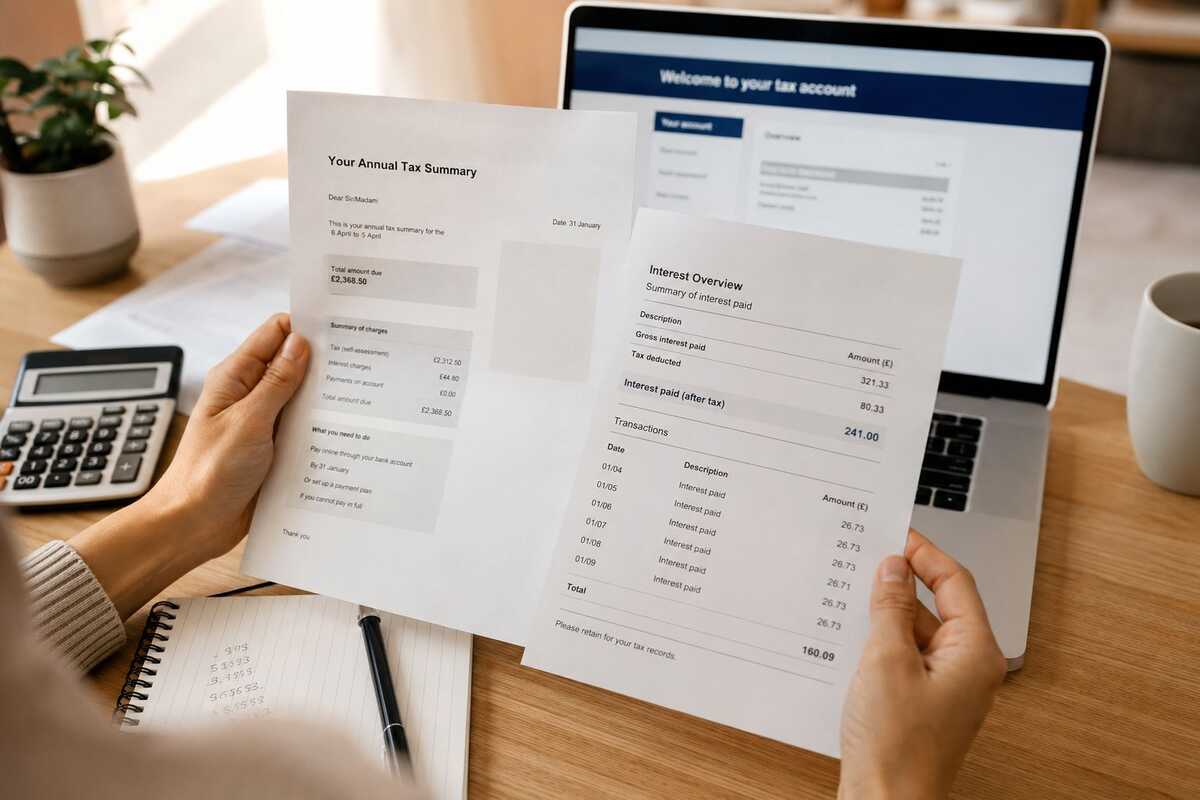
If HMRC has told you that you owe tax on savings interest, or your payslip suddenly looks smaller than usual, you’re not alone. An HMRC savings tax error has affected a growing number of UK savers over the past year, often because the figures HMRC is working from don’t match what people actually earned.
This is largely down to rising interest rates. More savers than ever are earning enough to go over their Personal Savings Allowance, and HMRC’s systems, which rely on data sent by banks and building societies, don’t always get it right. Some people have been told they earned thousands in untaxed interest when the real figure was under a hundred pounds. Others have had tax-free ISA interest counted as taxable by mistake.
This guide explains why these errors happen, how to check your own figures, and how to dispute an incorrect notice and reclaim any tax you’ve overpaid. If you’re still getting familiar with what these letters actually mean, it’s worth starting there first.
What Causes an HMRC Savings Tax Error
HMRC no longer expects most savers to report their interest manually. Banks and building societies send this data directly to HMRC each year, which then checks it against your Personal Savings Allowance (PSA).
The system has a few common weak points:
- Estimated figures. HMRC sometimes projects your annual interest from partial-year data instead of waiting for the final confirmed amount.
- Duplicated reporting. Switching accounts or a bank restructuring its systems can lead to the same interest being counted twice.
- Closed accounts still showing interest. Some accounts continue generating figures on HMRC’s records years after they were closed.
- Joint accounts misattributed. The full interest from a joint account is sometimes assigned to one person instead of being split.
None of this suggests HMRC is acting unfairly. It’s a data-matching problem at scale. But it does mean the responsibility for checking the numbers falls on you, not HMRC.
Signs Your Savings Interest Figures Are Wrong
A few warning signs are worth watching for:
- The interest figure on your tax code or Simple Assessment notice is much higher than your bank statements show
- ISA interest appears to be counted as taxable
- An account you closed months or years ago still shows interest
- A joint account’s full interest is listed under your name alone
- Your tax code has changed with little or no explanation
If any of these apply, pull your bank’s annual interest certificate and compare it line by line with what HMRC has on record.
How HMRC Uses Bank Data to Set Your Tax Code
Banks and building societies are legally required to report the interest they’ve paid each customer directly to HMRC. This happens separately from anything you file through Self Assessment.
HMRC then checks that data against your Personal Savings Allowance:
- Basic-rate taxpayers can earn up to £1,000 in savings interest tax-free
- Higher-rate taxpayers get a reduced allowance of £500
- Additional-rate taxpayers (earning over £125,140) get no PSA at all
If HMRC’s data shows you’ve gone over your allowance, it either adjusts your tax code so extra tax is collected through PAYE, or sends a Simple Assessment letter asking for payment directly. Both depend entirely on the accuracy of the interest figure it’s been given, which is exactly where errors creep in.
Why ISA Interest Sometimes Gets Taxed by Mistake
This is one of the more frustrating versions of the error, since ISA interest is supposed to be completely shielded from tax. Interest earned in a Cash ISA, Stocks and Shares ISA, or Lifetime ISA shouldn’t count toward your Personal Savings Allowance at all.
The mistake usually starts with the bank. If a provider misclassifies an ISA when submitting its data to HMRC, treating it like a standard savings account, that interest can end up taxed as if it were ordinary income.
If any ISA interest shows up in an HMRC tax calculation, it’s worth challenging straight away. It should never appear there.
How to Check Your Personal Savings Allowance
Before contacting HMRC, run your own quick check:
- Download your interest certificates. Most banks provide an annual summary of interest paid, usually under statements or tax documents in your app or online banking.
- Add up interest from standard accounts only. ISA interest doesn’t count toward your PSA, so leave it out.
- Confirm your tax band. Your PSA depends on whether you’re a basic, higher, or additional-rate taxpayer for that year.
- Compare your total with HMRC’s figure. Log into your Personal Tax Account on GOV.UK to see what interest HMRC currently has on file.
Any gap between the two totals is your starting point for a dispute.
How to Dispute an Incorrect Tax Notice
Once you’ve confirmed a discrepancy, here’s how to raise it:
- Review the breakdown in your Personal Tax Account on GOV.UK.
- Identify the specific error, whether it’s a wrong figure, a closed account, an ISA misclassification, or a joint account issue.
- Gather your evidence, such as bank interest certificates, account closure confirmations, or joint account statements.
- Contact HMRC through your Personal Tax Account, by phone, or in writing, and explain the discrepancy with supporting documents.
- Ask for written confirmation once HMRC agrees to correct your tax code or Simple Assessment.
- Keep a record of every call, letter, and reference number in case the issue comes up again next year.
Most disputes are resolved once HMRC can see that the actual bank data doesn’t match its own records, though it usually takes you pushing the process rather than waiting for it to self-correct.
What to Do If Your PAYE Tax Code Suddenly Changes
A smaller pay cheque is often the first sign something’s wrong, sometimes before any letter arrives. If your tax code changes and your take-home pay drops, act quickly:
- Compare your latest payslip with your previous one to see the new code
- Check your Personal Tax Account for the reason HMRC gives
- Compare the savings interest figure listed there with your own records
- Contact HMRC to request a correction if the figure is wrong
The longer an incorrect tax code stays in place, the more tax you overpay, so speed matters here more than almost anywhere else in this process.
How to Contact HMRC and Request a Correction
You have a few options, depending on how quickly you need a resolution:
- Personal Tax Account (online): fastest for straightforward corrections and for checking what data HMRC holds
- Phone (Income Tax helpline): useful for explaining more complex cases, like a joint account error
- Post: best when submitting documents as evidence, though the slowest option
Whichever route you choose, be specific. Rather than saying your tax is wrong, explain the exact figure you believe is incorrect and why, with evidence ready to send.
Reclaiming Overpaid Tax
Once HMRC accepts that an error occurred, you’ll usually get your money back in one of two ways:
- Automatic adjustment. Your tax code is corrected going forward, and any overpayment is refunded through PAYE or paid out directly.
- Manual refund. For Simple Assessment cases, you may need to check how to claim a tax refund once the correct figure is confirmed.
Processing times vary, but straightforward corrections are often resolved within a few weeks once the right documents are submitted. Joint account disputes can take longer.
You can typically claim back overpaid tax for up to four previous tax years, so if you suspect this has affected you before, it’s worth checking older years too, not just the current one.
How to Avoid Future Savings Tax Errors
You can’t control how your bank reports data to HMRC, but you can reduce the odds of being caught out again:
- Check your Personal Tax Account once or twice a year, not just when a letter arrives
- Keep your own record of interest earned across all accounts, including ISAs
- Tell your bank promptly about account closures or changes, since delayed reporting is a common cause of errors
- Review your tax code whenever it changes, even slightly
Regular checking catches a mistake early, before it turns into months of overpaid tax.
When to Get Help From a Tax Adviser
Most savings tax errors are simple enough to resolve with the right documents. It’s worth involving a tax adviser or accountant if:
- You have multiple joint accounts and the error is hard to untangle
- HMRC disputes your correction and the issue isn’t resolving
- You’re an additional-rate taxpayer with more complex income sources
- You suspect the error has affected several previous tax years
A qualified adviser can deal with HMRC on your behalf and usually knows exactly what evidence will move a dispute along faster.
FAQs
Why does HMRC think I owe tax on savings I didn’t earn?
HMRC relies on interest data submitted by your bank, which can sometimes be estimated, duplicated, or wrongly attributed rather than reflecting your actual account activity.
Can HMRC tax my ISA interest by mistake?
Yes. This usually happens due to a reporting error on the bank’s side. ISA interest should never count toward your Personal Savings Allowance, so it’s worth disputing immediately.
How do I know if my Personal Savings Allowance has been miscalculated?
Compare your bank’s annual interest certificate with the figure shown in your Personal Tax Account on GOV.UK. Any mismatch suggests the calculation is wrong.
What happens if I ignore an incorrect HMRC tax notice?
The tax is usually still collected, either through an adjusted tax code or a Simple Assessment payment, regardless of whether the figure is accurate. It’s up to you to raise the dispute.
How far back can I claim overpaid tax?
You can generally reclaim overpaid tax for up to four previous tax years, so it’s worth checking earlier years if you think you’ve been affected before.
Do I need an accountant to dispute an HMRC savings tax error?
Not usually. Most cases can be resolved directly with HMRC using your own bank records. An accountant is more useful for complex or unresolved disputes.
Conclusion
An HMRC savings tax error is more common right now than most people realise, largely because rising interest rates have pushed millions of ordinary savers over allowances that haven’t changed in years. Most cases are fixable, but only if you check your own figures rather than assume HMRC has got them right.
If something on your tax code or Simple Assessment notice looks off, pull your bank’s interest certificate, compare it against your Personal Tax Account, and raise the discrepancy with HMRC directly. With the right evidence, most disputes get resolved and any overpaid tax finds its way back to where it belongs.

One thought on “How to Dispute an HMRC Savings Tax Error and Reclaim Overpaid Tax”