Search for “Repmold” and you’ll find several articles, each describing it a little differently. One calls it a 3D-printing shortcut, another calls it a mold repair method, and a third frames it as a broader manufacturing trend. This guide brings those pieces together in one clear explanation.
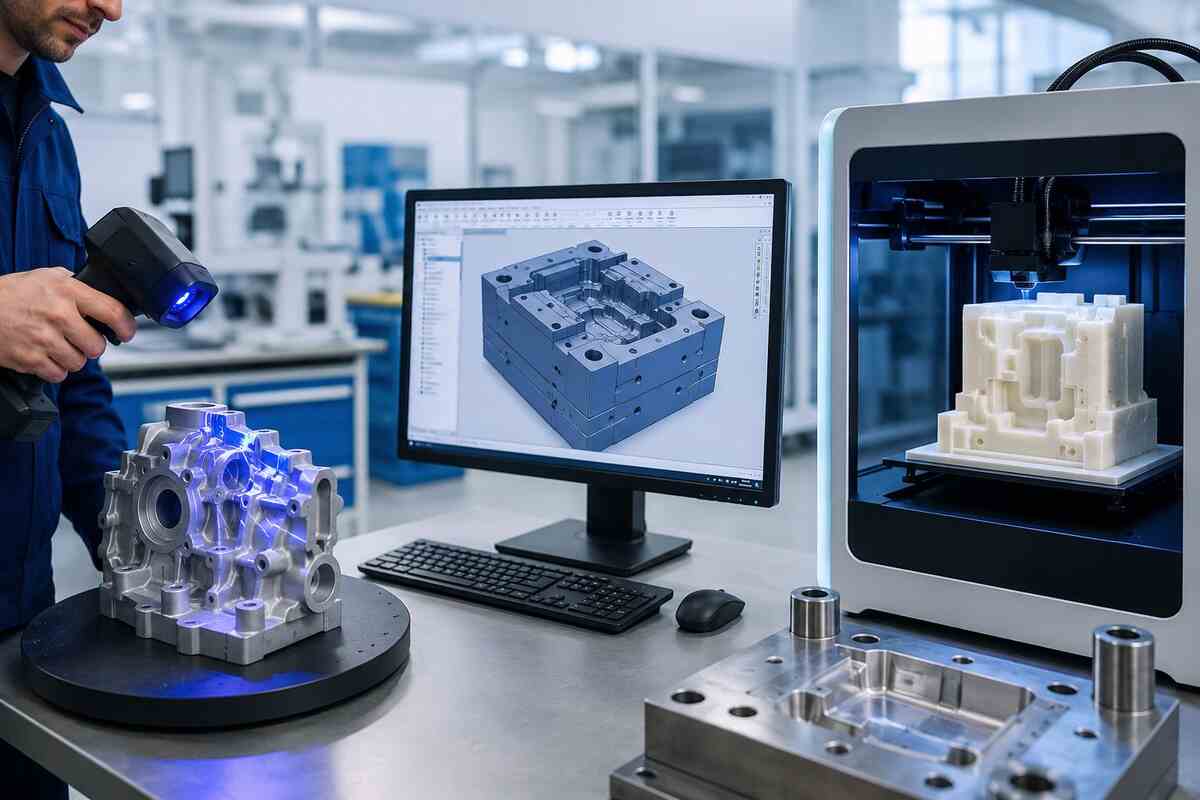
Repmold refers to a digital approach to mold making that combines 3D scanning, CAD design, and 3D printing to create, repair, or replicate molds faster than traditional methods allow. Instead of carving or machining a mold from scratch, teams work from digital files that can be adjusted, tested, and reproduced with far less manual labor.
Below, you’ll learn how the process works, what technology powers it, where it’s used, how it compares to conventional mold making, and whether it fits your project.
What Does Repmold Mean in Manufacturing?
Repmold describes a workflow where a physical part or mold is captured digitally, then used to produce a new or improved mold. The name is shorthand for “replicate” and “mold,” reflecting what the process centers on: reproducing mold geometry accurately using digital tools instead of manual craftsmanship.
It isn’t a single branded product or one company’s invention. It’s a category of technique, similar to how “rapid prototyping” describes an approach rather than one specific tool. Manufacturers, product designers, and small workshops use versions of this process to:
- Recreate a mold for a discontinued or hard-to-source part
- Fix a damaged mold without redesigning it from zero
- Test a new part design before committing to expensive tooling
The common thread is speed. Traditional mold making can take weeks of manual work. A digital-first approach shortens that timeline significantly.
How the Repmold Process Works
The workflow follows a consistent pattern, even though specifics vary by shop and industry.
1. Capture the part or mold digitally. This starts with a 3D scan of an existing part or mold, or a CAD drawing built from scratch if no physical reference exists. A 3D scanner captures the exact surface geometry, which helps when original design files are lost or outdated.
2. Refine the digital model. Raw scan data is rarely perfect. Engineers use CAD software to smooth out errors, correct dimensions, and prepare an accurate 3D model.
3. Convert the part model into a mold cavity. The part geometry is translated into the negative space needed for a mold: the shape the final material will be cast or injected into.
4. Produce the mold. Depending on the application, the mold may be 3D printed directly, or the digital file may guide CNC machining or silicone mold casting.
5. Test and refine. Because the master copy is a file, adjustments like fixing a tolerance issue or correcting a curve can be made in software and reprinted, rather than rebuilt by hand.
That last step is what sets this approach apart. Iteration is fast because changes happen in a file, not in physical tooling.
The Technology Behind Repmold
Three technologies make this process possible.
3D Scanning
3D scanners capture the exact shape of a physical object as a digital mesh, which becomes the starting point for the mold design. This is especially useful for reverse-engineering old or worn parts with no surviving blueprint.
CAD Software
CAD tools turn scan data or fresh sketches into precise, editable 3D models. This is where dimensions get corrected and mold cavities get designed, including details like draft angles and wall thickness.
3D Printing
Once a mold design is finalized, 3D printing can produce it directly, or produce a pattern used for silicone or resin casting. Technologies like SLA (stereolithography) and SLS (selective laser sintering), both developed in the 1980s, laid the groundwork for today’s rapid mold production.
Together, these tools remove much of the manual labor traditional mold making requires, which is the main reason this approach has gained traction for prototyping and small production runs.
Key Benefits of This Molding Method
- Faster turnaround. Digital files can move from design to physical mold in days rather than weeks.
- Lower upfront cost for small runs. Skipping traditional tooling costs makes sense when you only need a handful of parts.
- Easier design changes. Fixing a flaw means editing a file, not remachining a mold.
- Better reverse-engineering. Recreating a mold for an obsolete part becomes realistic, since scanning captures geometry that no longer has records.
- Less material waste. Digital iteration means fewer failed physical attempts before landing on a working design.
This doesn’t make traditional mold making obsolete. It gives teams another option, especially useful earlier in a product’s life cycle.
Repmold vs Traditional Mold Making
| Factor | Repmold (Digital Approach) | Traditional Mold Making |
| Design method | 3D scanning / CAD | Manual drafting or machining |
| Production speed | Days | Weeks |
| Best for | Prototypes, small batches, repairs | Large-scale, high-volume production |
| Cost for small runs | Lower | Higher (due to tooling costs) |
| Iteration | Fast, file-based changes | Slow, often requires rebuilding tooling |
| Durability at scale | Lower for high-volume runs | Higher, built for long production life |
Traditional mold making still wins for high-volume, long-life production, where machined steel or aluminum molds last far longer than 3D-printed tooling. The digital approach works best earlier in the process: prototyping, testing, repair work, and short production runs where speed matters more than long-term durability.
Industries That Use Repmold
- Automotive repair and restoration — recreating obsolete trim pieces, brackets, or housings for older vehicles
- Consumer product prototyping — testing form and fit before committing to expensive injection molds
- Medical and dental devices — producing custom-fit components where every mold differs slightly
- Industrial equipment maintenance — replacing worn machine parts quickly to reduce downtime
- Small-batch manufacturing and startups — producing limited runs without heavy tooling investment
If your work involves replacing something no longer manufactured, this is often the exact scenario where digital mold making makes the most sense.
Limitations to Consider
- Durability limits. 3D-printed molds handle far fewer production cycles than machined steel tooling, making them less suited to mass production.
- Material constraints. Not every casting or injection material pairs well with every mold material, so some combinations need testing.
- Scan accuracy issues. Poor lighting, reflective surfaces, or complex undercuts can reduce scanning precision, requiring manual cleanup.
- Skill requirements. Good results still depend on CAD proficiency and an understanding of mold design principles like draft angles and shrinkage rates.
These aren’t dealbreakers. They’re factors that determine whether this approach fits a specific job, or whether traditional mold making is the better route.
Repmold Cost vs Traditional Molds
Cost depends heavily on volume and complexity.
For small batches or single prototypes, digital mold making is typically cheaper. You avoid the tooling setup costs that make traditional molds expensive to justify for short runs, sometimes thousands of dollars before a single part is produced.
For high-volume production, the math flips. Machined steel or aluminum molds cost more upfront but last far longer per part, lowering the per-unit cost at scale.
A simple rule of thumb:
- Fewer than a few hundred units → the digital approach usually wins on cost
- Tens of thousands of units or more → traditional tooling usually wins on cost
If you’re unsure which category your project falls into, get quotes for both approaches before committing.
Is Repmold Right for Your Project?
It’s likely a good fit if you:
- Need a small number of parts, not thousands
- Are still testing or refining a design
- Need to recreate a part with no existing blueprint
- Want to minimize upfront tooling investment
Traditional mold making is likely better if you:
- Need high-volume, long-term production
- Require maximum mold durability and repeatability
- Work with materials that demand precise, high-pressure injection molding
Many manufacturers use both: starting with a digital approach to test and refine a design, then switching to traditional tooling once the design is finalized and volume increases.
FAQs
Is Repmold a specific company or product?
No. It’s a digital mold-making approach, not a branded product or company.
What’s the main advantage of Repmold over traditional mold making?
Speed and flexibility. Digital files allow fast design changes and quicker production for prototypes and small batches.
Can Repmold molds be used for mass production?
Generally no. 3D-printed molds wear out faster than machined steel or aluminum tooling, so they suit prototyping and short runs better than high-volume manufacturing.
What software is used in the Repmold process?
CAD software handles design and mold cavity work, often paired with 3D scanning software to capture existing part geometry.
Is Repmold cheaper than traditional mold making?
For small quantities, usually yes. For large runs, traditional tooling tends to cost less over time due to its longer lifespan per mold.
Conclusion
Repmold is a digital way to design, repair, and replicate molds using 3D scanning, CAD, and 3D printing together. It won’t replace traditional mold making for large-scale production, but for prototypes, repairs, and small batches, it offers real advantages in speed and cost. Match the method to the job: choose Repmold when speed and iteration matter most, and choose traditional tooling when you need durability at scale.
Read more: PedroVazPaulo Wealth Investment: Philosophy Explained