If you’ve researched operating room lighting, you’ve likely come across the name Convelar. It’s one of the most widely used surgical light systems in hospitals, clinics, and first-aid stations, and for good reason: it’s built specifically to solve the shadowing and visibility problems that come with standard OR lighting.
This guide explains how these LED surgical lights work, what each core feature actually does, where they’re typically used, and how to maintain them properly. No sales pitch, just a clear breakdown of the technology.
What Is a Convelar LED Surgical Light?
This is a line of surgical lights manufactured by Dixion, available in floor-standing and ceiling-mounted configurations. The lineup includes several models, such as the 1603, 1605, and 1607, which differ mainly in light head size and output.
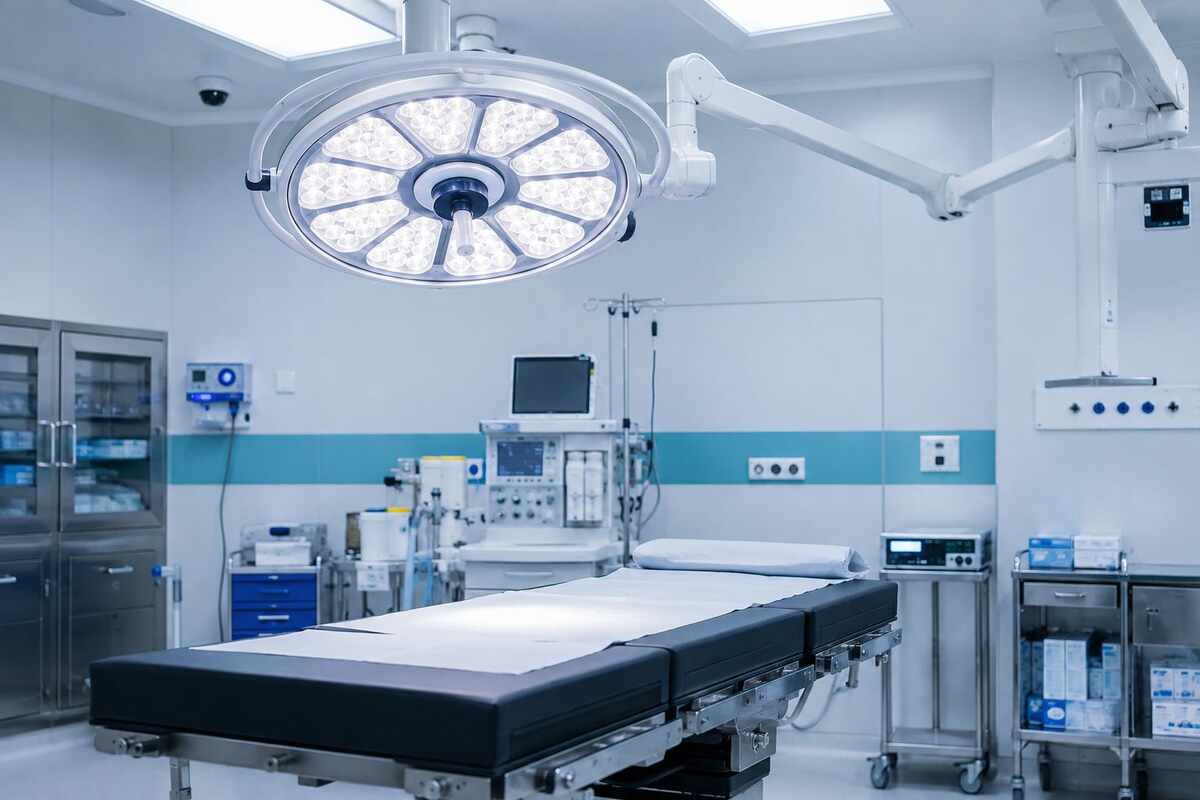
Every Convelar light is designed around one goal: eliminating shadows in the surgical field. When multiple people work close to a patient, standard lighting casts shadows exactly where visibility matters most. It solves this using LED arrays combined with reflective engineering to keep the surgical site evenly lit, regardless of how many hands are in the way.
These are precision medical devices, not general-purpose fixtures. Every feature, from the mirror layout to the backup battery, is built around one priority: consistent, reliable visibility for the surgical team.
How LED Surgical Lights Achieve Shadow-Free Illumination
Shadow-free lighting is harder to engineer than it sounds. This system solves it with a multi-source LED configuration rather than a single central bulb.
The light head contains dozens of individual LEDs arranged around its surface, each shining from a slightly different angle. If one source gets blocked by a surgeon’s head or an instrument, the surrounding LEDs fill the gap almost instantly.
The result is even lighting across the surgical field, even with several people working close together. This matters most during longer procedures, where consistent visibility reduces eye strain for the entire team.
Light Head Sizes and Diameter Options
Not every operating room needs the same coverage, which is why these lights come in multiple head sizes:
- Around 260 mm – suited for compact treatment rooms and minor procedure suites
- Around 500 mm – a common choice for general surgery, offering wider coverage without overwhelming the room
- Around 700 mm – used in major operating theaters or procedures involving multiple specialists
Some models combine two light heads on a single mount, pairing a smaller and larger head together. This dual-head setup gives hospitals flexibility to adjust coverage for different procedures without installing separate fixtures.
Multi-Mirror Reflection and Light Quality
Beyond the LED layout, Convelar uses a multi-mirror reflection system to shape how light travels from the source to the surgical field.
Raw LED light, left unshaped, tends to be harsh and uneven. The mirrors inside the light head redirect and soften individual beams so they blend smoothly by the time they reach the patient. This reduces glare, minimizes light loss, and maintains a shadowless effect even in partially darkened rooms, common during procedures like laparoscopic surgery.
The result is light that feels controlled and even, rather than concentrated like a spotlight.
Color Temperature and Natural Light Accuracy
Color temperature affects how accurately surgeons can distinguish tissue types, blood, and subtle color variations during a procedure.
These LED lights are typically calibrated to around 4500K, close to natural daylight. This matters more than it might seem — color temperature plays a direct role in surgical visibility, affecting how easily a surgeon can tell healthy tissue apart from compromised tissue at a glance. Older halogen surgical lights tend to run warmer, subtly shifting how colors appear under the light.
Backup Power for Uninterrupted Surgery
Power interruptions during surgery are more than inconvenient; they’re a safety risk. This is where the design really stands out.
Most models include an automatic backup lamp or battery system that activates if the primary power source fails:
- If the main lamp malfunctions, the backup switches on in under 0.3 seconds, fast enough that the surgical team barely notices.
- Optional battery backup units can keep the light running for up to two hours during a full power outage.
For facilities in areas with less reliable power infrastructure, or hospitals that simply want an extra safety margin, this feature is often a deciding factor.
Mobility and Ease of Positioning
A surgical light only helps if it can be positioned exactly where it’s needed, without a technician struggling to adjust it mid-procedure.
The floor-standing models use a cantilever arm that allows smooth repositioning while locking firmly in place once adjusted. This balance matters: too loose, and the light drifts during use; too stiff, and adjustments become a hassle.
The mobile base also allows units to move between rooms, giving facilities flexible lighting coverage across multiple treatment spaces instead of a fixture permanently tied to one location.
Infrared Filtering and Heat Reduction
High-intensity lighting close to an open surgical site generates heat, which can be uncomfortable for the team and, during longer procedures, may affect exposed tissue.
This is addressed with infrared ray filtering, designed to cut radiant heat output by up to 99%. This allows the light to run at full brightness for extended periods without turning the surgical field into an uncomfortably warm workspace, a small detail on paper with a real impact during multi-hour procedures.
Where These Surgical Lights Are Used
Despite the single product name, Convelar lights serve a range of clinical settings:
- General and specialized operating rooms in hospitals
- Emergency and first-aid stations, where reliable illumination is critical
- Outpatient procedure and examination rooms
- Dental and minor surgical clinics, particularly the smaller head models
This versatility explains why the lineup includes multiple sizes and configurations. A single-head unit for a small clinic looks nothing like the dual-head setup used in a major teaching hospital’s operating theater.
Convelar vs Standard Operating Room Lighting
Comparing these lights directly against older or more basic OR lighting highlights the practical differences:
| Feature | Convelar LED Lights | Standard/Halogen OR Lights |
| Shadow control | Multi-LED array minimizes shadows | Single-source bulbs cast more shadow |
| Color accuracy | ~4500K, close to daylight | Often warmer, less true to life |
| Heat output | Filtered, up to 99% reduction | Higher radiant heat near the field |
| Backup lighting | Automatic switch under 0.3 seconds | Often absent or manual |
| Lifespan | LEDs typically outlast halogen bulbs | Bulbs need more frequent replacement |
The difference isn’t just brightness. It’s consistency, safety, and fewer small frictions that add up over a long procedure.
Maintenance Tips for Longer Lifespan
Even well-engineered equipment needs regular upkeep. A few habits help these lights perform reliably for years:
- Clean the light head with hospital-approved disinfectants, avoiding abrasive materials that could scratch the mirrors
- Check the cantilever arm tension periodically so positioning stays smooth without drifting
- Test the backup power system on a schedule, not just after a failure occurs
- Watch for dimming or color shift in the LEDs over time, a sign it may need servicing
- Keep firmware or control panel software updated on models with digital controls
Routine maintenance like this extends the fixture’s usable life well beyond neglected equipment, and it avoids the far more disruptive scenario of a light failing mid-procedure.
FAQs
What makes Convelar different from a regular LED light?
These lights are built specifically for surgical use, with multi-source LED arrays, mirror-based shadow control, and daylight-matched color temperature not found in general-purpose LED fixtures.
How long do the LED bulbs last?
LED components generally last far longer than halogen bulbs, often rated for tens of thousands of hours, which reduces replacement frequency and long-term maintenance costs.
Do all Convelar models include backup power?
Automatic backup lamp switching is standard on most models. Extended battery backup, up to two hours, is usually offered as an optional add-on.
Is a larger light head always the better choice?
Not necessarily. Head size should match the room and procedure type. A 700 mm head suits major operating theaters, while smaller heads work well for exam rooms and minor procedures.
Can these lights move between rooms?
Yes. The floor-standing models sit on mobile bases, so facilities can reposition them across treatment spaces as needed.
Conclusion
Convelar LED surgical lights bring together several practical design choices: multi-source LEDs, mirror-based shadow reduction, daylight-accurate color temperature, and dependable backup power, into fixtures built for real surgical demands. Understanding what each feature actually does makes it much easier to judge whether this light fits your facility, rather than relying on a spec sheet alone.
Whether you’re equipping a full operating theater or a smaller procedure room, good surgical lighting comes down to more than brightness. It’s about consistency, accurate color, and dependability when it matters most, and that’s what the Convelar lineup is built to deliver.
Read more: What Is Repmold? A Clear Guide to This Molding Process