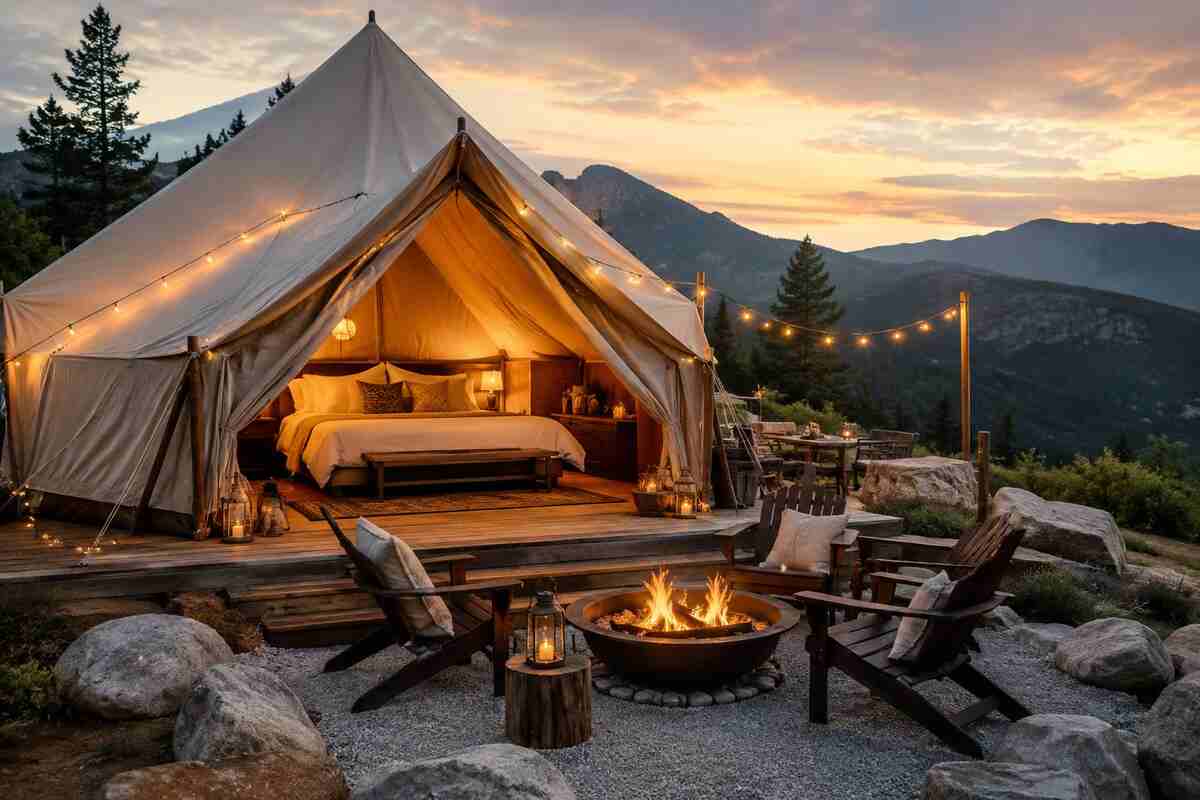
Travelers today are paying hotel prices to sleep in tents. Not the sleeping bag and instant coffee kind, but canvas suites with king beds, heated floors, and private bathrooms. This is the glamping economy, and it’s turning ordinary landowners into hospitality entrepreneurs.
If you’ve ever looked at an empty field and wondered what it could become, this guide walks you through it: what the glamping economy actually looks like, whether it’s worth starting, and how to build a site from the ground up, including costs, location, legal steps, guest experience, and realistic income.
What Is Glamping and Why Is It Growing So Fast?
Glamping, short for “glamorous camping,” blends outdoor living with hotel-level comfort. Think safari tents, geodesic domes, converted airstream trailers, or treehouses fitted with real beds, electricity, and sometimes Wi-Fi.
A few things are driving its growth:
- Travelers now prefer outdoor, low-density destinations over crowded hotels.
- Younger travelers value experiences over possessions, and glamping delivers a shareable one.
- Remote work means more people travel mid-week, filling gaps hotels often struggle with.
- Social platforms have turned unique stays into their own marketing channel.
People want nature without giving up comfort, and they’re willing to pay for it.
Understanding the Glamping Economy: Market Opportunity Explained
The glamping economy covers the businesses and land built around upscale outdoor stays: site owners, tent and dome manufacturers, booking platforms, and independent operators. Grand View Research values the global glamping market at $3.8 billion in 2025, projecting it to reach $7.9 billion by 2033 at a 9.5% annual growth rate, reflecting rising demand for nature-based, experience-focused travel.
What makes it attractive is the low barrier to entry compared to traditional hospitality. You don’t need a hotel license or years of construction. A few acres of scenic land, well-designed units, and a solid online presence are often enough to start.
That doesn’t mean it’s easy. It means the opportunity is more accessible than most people assume, especially for owners who treat it as a real business rather than a side project.
Is Starting a Glamping Business Right for You?
Before getting into logistics, it helps to know whether this fits your goals.
Glamping tends to suit people who:
- Own or have access to land with scenic appeal
- Enjoy hosting and don’t mind hands-on guest interaction
- Can handle seasonal income swings
- Want a business that blends hospitality with the outdoors
It’s a harder fit for anyone looking for a fully passive investment, since most successful sites need active management, especially in the first year or two.
How Much Does It Cost to Start a Glamping Site?
Costs vary by scale, but here’s a general range for a small operation of 3 to 5 units.
| Expense | Estimated Cost |
| Land purchase or lease setup | $0 (if owned) to $50,000+ |
| Glamping units (tents, domes, pods) | $8,000–$25,000 each |
| Utilities (water, electric, septic) | $10,000–$40,000 |
| Furnishing and interiors | $2,000–$6,000 per unit |
| Permits and legal fees | $1,000–$5,000 |
| Marketing and booking setup | $500–$2,000 |
A modest 3-unit site can launch for around $40,000 to $80,000. Luxury-focused setups often exceed $150,000. Many owners start with one or two units and reinvest profits to expand.
Choosing the Best Location for Your Glamping Business
Location shapes a glamping business more than almost any other decision. Guests are booking a view and a feeling, not just a place to sleep.
Strong locations usually offer:
- Proximity to natural landmarks like lakes, mountains, or coastlines
- A 1 to 3 hour drive from a major city for weekend travelers
- Privacy, with minimal road noise or nearby neighbors
- Access to hiking, water activities, or other outdoor draws
Check local tourism trends too. An undiscovered area may need more marketing, while a popular region brings built-in demand along with more competition.
Types of Glamping Accommodations to Consider
Your choice of unit shapes both your budget and the guest experience.
- Safari tents are spacious, classic, and relatively affordable.
- Geodesic domes work well for stargazing and colder climates.
- Yurts are sturdy, insulated, and visually distinctive.
- Airstream trailers bring retro appeal with built-in mobility.
- Treehouses command premium pricing but cost more to build.
- A-frame cabins offer a hybrid cabin-glamping feel.
Many operators mix two or three unit types to appeal to different guests and price points.
Permits, Zoning, and Legal Requirements for Glampsites
This step is easy to underestimate, but it matters most for long-term stability.
Before building, check:
- Zoning laws, to confirm your land allows short-term rental or hospitality use
- Health and safety permits, especially for septic, water, and fire safety
- Business licensing, which varies by state or country
- Insurance, for liability coverage and property protection
- Local short-term rental rules, since some areas cap nights or require special permits
A local zoning office or land-use attorney can help you avoid costly redesigns later.
How to Design a Memorable Guest Experience
In the glamping economy, the experience is the product, not just the accommodation. Guests compare your site to boutique hotels, not budget campgrounds.
Small details matter:
- Hotel-quality bedding
- Private fire pits or outdoor seating
- Welcome baskets or local guides
- Clean, accessible bathroom facilities
- Reliable heating and cooling year-round
The goal is simple: guests should leave with something they couldn’t easily get at home.
Marketing Strategies to Attract Glamping Guests
A beautiful site won’t fill bookings on its own. A solid marketing mix combines visibility with trust.
Effective channels include:
- Booking platforms like Airbnb, Glamping Hub, and Hipcamp for early visibility
- A dedicated website with direct booking to cut platform fees over time
- Instagram and Pinterest, where aspirational visuals perform well
- Local SEO, so your site ranks for searches like “glamping near [region]”
- Email marketing, to encourage repeat visits and referrals
High-quality photography is one of the biggest factors in whether someone books.
Pricing and Revenue Models in the Glamping Economy
Pricing in the glamping economy sits above traditional camping and below full luxury hotels, which gives operators healthy margins when run well.
Typical nightly rates:
- $100–$200 for simple safari tents or yurts
- $200–$400 for domes, cabins, or premium units
- $400+ for treehouses or fully luxury stays
Beyond nightly rates, many operators add revenue through:
- Add-ons like breakfast baskets, guided hikes, or bonfire kits
- Extended-stay discounts in the off-season
- Event hosting for small weddings, retreats, or photo shoots
A well-run 4 to 5 unit site can produce solid supplemental or even full-time income once occupancy stabilizes, particularly in destination-worthy locations.
Common Challenges New Glamping Business Owners Face
It’s not all scenic views and good reviews. New owners often run into:
- Seasonality, with sharp booking drops in colder months for many regions
- Maintenance demands, since outdoor units wear faster than indoor hotel rooms
- Utility limitations, as off-grid setups can be costly to install and maintain
- High guest expectations, since “glamorous” sets a bar that shows quickly in reviews when cut short
Planning for these challenges early is what separates long-term operators from short-lived ones.
Is the Glamping Economy Worth the Investment in 2026?
For the right location and owner, yes. The glamping economy remains one of the more accessible entry points into hospitality, with lower startup costs than traditional hotel development and steady demand for unique, nature-based stays.
It’s not guaranteed, though. Success depends on location, execution, and how well you manage the guest experience. Owners who run it as a genuine hospitality business, not just a tent rental, tend to see the strongest returns.
FAQs
Is glamping profitable?
Yes, when run well. Margins tend to beat traditional camping thanks to premium pricing, though profitability still depends on location, occupancy, and operating costs.
How much land do you need for a glamping business?
There’s no fixed minimum, but 2 to 5 acres is usually enough for a small 3 to 5 unit site with privacy between units.
Do you need a special license to run a glamping site?
In most areas, yes. This typically includes a short-term rental permit, health and safety approval, and a business license, depending on local rules.
What’s the best glamping unit type for beginners?
Safari tents are a common starting point due to lower cost and quicker setup compared to domes or treehouses.
How long does it take to start a glamping business?
Most sites open within 4 to 12 months from initial planning, depending on permitting and construction timelines.
Conclusion
The glamping economy has grown into a real business opportunity for owners who pair the right location with a well-designed guest experience. Get the land, unit type, permits, and marketing right, and unused land can turn into a steady income stream, one memorable stay at a time.
Want more guides like this? News A Pulse covers travel trends, business ideas, and outdoor hospitality stories every week.