If you’ve searched for “droven io devops tutorials,” you may have noticed the results don’t fully agree with each other. Some describe a structured learning platform. Others barely explain what it covers. This guide breaks down what’s actually known about Droven io DevOps tutorials, who they’re best suited for, and how to build a realistic DevOps learning path around them.
Whether you’re brand new to DevOps or brushing up on specific tools, you’ll find a clear breakdown of what to expect, what to verify before committing your time, and how to structure your learning from here.
What Are Droven io DevOps Tutorials?
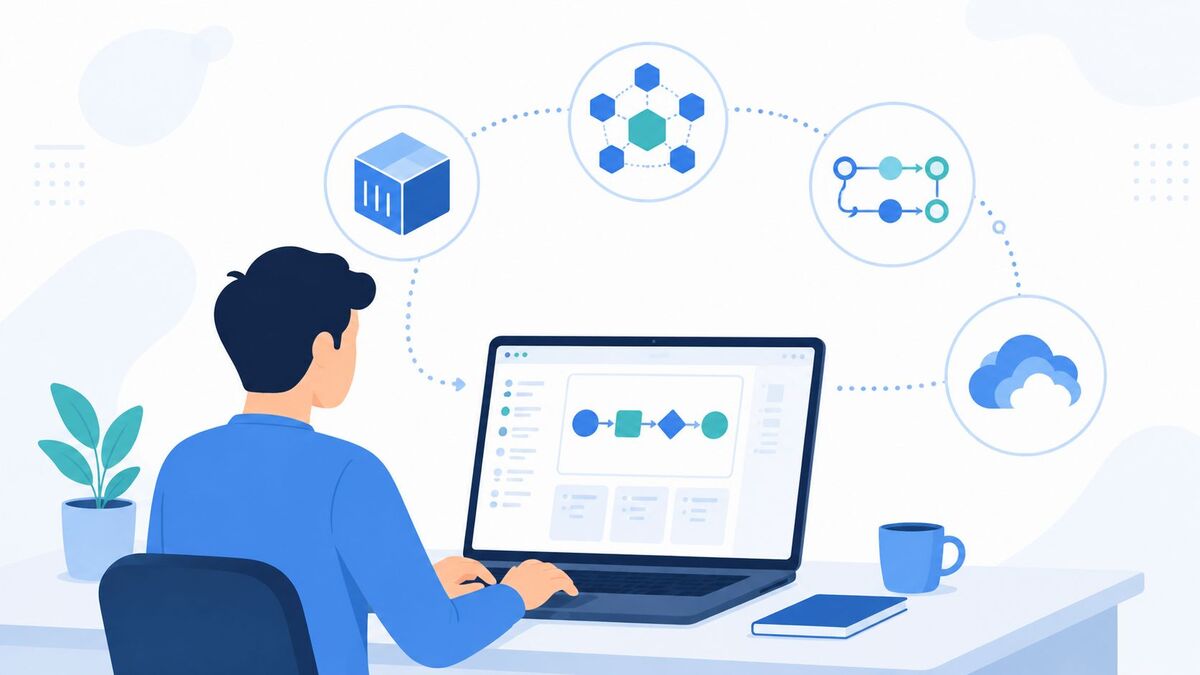
Droven io DevOps tutorials are described as educational content covering core DevOps tools and practices, including Docker, Kubernetes, CI/CD pipelines, automation, and cloud deployment. The stated goal is to simplify DevOps concepts that often feel intimidating to newcomers.
That’s a reasonable goal, and it matches what most beginners actually need: not a computer science degree, but a clear order to learn things in.
Before investing real time, check the source directly. Look for actual lesson pages, dated content, and named authors. Broad descriptions like “we cover Docker and Kubernetes” are common across tech content sites, and they don’t always reflect a fully developed curriculum behind them.
Who Should Use These DevOps Learning Resources
DevOps tutorials like these tend to work best for:
- Complete beginners who understand basic command-line use and want a roadmap instead of scattered videos
- Developers moving into infrastructure who already write code but haven’t managed deployments or servers
- IT professionals shifting into cloud roles who need to learn containerization and automation alongside existing sysadmin skills
- Students preparing for certifications who want conceptual grounding before exam-specific prep
If you already run production Kubernetes clusters or write Terraform modules professionally, introductory tutorials like these likely won’t add much. They’re built for people early in the DevOps learning curve.
Core DevOps Concepts and Tools Covered
Droven io DevOps tutorials appear to follow a fairly standard beginner-to-intermediate syllabus:
- Version control – Git fundamentals, branching, and collaboration workflows
- Containerization – Docker basics, building images, and running containers
- Orchestration – an introduction to Kubernetes and why container orchestration matters at scale
- CI/CD pipelines – the difference between continuous integration and continuous deployment
- Infrastructure as Code (IaC) – tools like Terraform for defining infrastructure in code
- Cloud deployment basics – concepts that apply across AWS, Azure, and Google Cloud
None of these topics are unique to one platform. You’ll find the same core subjects in official documentation, free courses, and paid bootcamps. What matters more than the topic list is depth: does a tutorial walk you through building something, or just explain concepts in the abstract?
How Droven io DevOps Tutorials Are Structured
Descriptions of Droven io DevOps tutorials suggest a progression from foundational concepts to more advanced tools, rather than a random mix of unrelated posts. That typically means starting with Linux fundamentals and Git before moving into containerization, CI/CD, and cloud infrastructure.
Structure like this matters. Learning DevOps tools out of order, such as jumping into Kubernetes before understanding what a container is, creates confusion that compounds quickly. When evaluating any DevOps learning resource, structure matters more than volume. Ten well-ordered lessons beat fifty scattered ones.
That said, a described structure and the actual reading experience aren’t always identical. It’s worth checking a real lesson before assuming the roadmap is as clean as advertised.
A Step-by-Step DevOps Learning Path for Beginners
Regardless of which resource you use, this order works well for learning DevOps from scratch:
- Learn Linux basics. Most DevOps tooling assumes comfort with the terminal, file management, and permissions.
- Learn Git properly. Go beyond
commitandpushinto branching strategies and merge conflicts. - Understand containers with Docker. Build a few images yourself before moving on.
- Explore CI/CD concepts. Set up a basic pipeline so the theory becomes concrete.
- Study Kubernetes fundamentals. Understand why orchestration exists before memorizing YAML syntax.
- Try Infrastructure as Code. Define a small piece of infrastructure with Terraform instead of clicking through a cloud console.
- Pick one cloud provider and go deep. AWS, Azure, and GCP all offer free tiers for applying what you’ve learned.
This sequence works whether you’re following Droven io DevOps tutorials, official documentation, or a mix of free resources. The source matters less than following a logical order and building things as you go.
Strengths and Limitations of These Tutorials
Potential strengths:
- Beginner-friendly framing that avoids heavy jargon
- Coverage of the core tools most DevOps job postings expect
- A stated structure that moves from fundamentals to advanced topics
Limitations to keep in mind:
- Reading about DevOps tools isn’t the same as troubleshooting them under pressure. No tutorial replaces hands-on lab time.
- Coverage across the web is inconsistent, making it hard to judge depth without checking firsthand.
- Tutorials can’t prepare you for every real-world issue. In DevOps, unexpected problems are constant.
Treat any tutorial content as a starting map, not a finish line. Pair reading with a sandbox environment. Most cloud providers offer free tiers built for exactly this kind of practice.
How It Compares to Other DevOps Learning Platforms
DevOps learners in 2026 have several solid options:
- Official documentation (Docker, Kubernetes, Terraform) – free and authoritative, though sometimes dense for beginners
- Structured courses (KodeKloud, freeCodeCamp, A Cloud Guru) – often include hands-on labs, some paid
- YouTube channels – free and useful for specific how-tos, less useful for a full curriculum
- Certification prep platforms – built around specific exams like AWS, Azure, or CKA
Droven io DevOps tutorials, as described, sit closer to a general educational blog than an interactive lab platform. If hands-on practice matters to you, pair any reading-based tutorial with a platform that lets you run real commands in a live environment.
Tips to Get the Most Out of DevOps Tutorials
- Build something after every lesson. Reading about Docker without running a container won’t stick.
- Keep a running notes file of commands and concepts. DevOps involves a lot of syntax, and repetition helps it stay.
- Don’t skip the fundamentals. Linux and Git feel less exciting than Kubernetes, but they’re the foundation everything else sits on.
- Cross-reference official docs when an explanation feels thin. They’re free and usually the most accurate source available.
- Join a community. DevOps forums, Discord servers, and local meetups fill in the gaps tutorials leave behind.
Is Droven io DevOps Tutorials Worth Your Time?
It depends on what you need. If you want a general introduction to DevOps concepts and terminology, content like this can be a reasonable starting point, especially if it’s free and written for beginners.
If you’re looking for hands-on labs, certification-grade depth, or mentorship, you’ll likely need to supplement with platforms built specifically for interactive practice. No single blog or tutorial series, however it’s marketed, should be your only source for something as practical as DevOps.
The most effective approach combines both: use general content to understand concepts, then reinforce it by building things yourself.
FAQs
Are Droven io DevOps tutorials free?
They’re presented as a free educational resource rather than a paid course platform. Verify current access directly on the source before assuming.
Do I need coding experience to start?
No. Basic command-line comfort helps, but many people start DevOps from an IT or sysadmin background rather than a development one.
What’s the difference between DevOps tutorials and a DevOps certification course?
Tutorials explain concepts and tools generally. Certification courses are built around passing a specific exam, like AWS Certified DevOps Engineer or Certified Kubernetes Administrator, and often include practice tests.
Can I learn DevOps without Kubernetes?
Yes, especially early on. Git, CI/CD, and basic automation don’t require Kubernetes knowledge. It becomes more relevant once you’re working with containerized applications at scale.
How long does it take to learn DevOps basics?
With consistent practice, most beginners grasp core concepts like Git, Docker, and basic CI/CD within a few weeks. Tools like Kubernetes and Terraform typically take a few months of hands-on use to feel comfortable with.
Is DevOps a good career path in 2026?
Yes. DevOps remains in demand as organizations continue prioritizing automation, faster deployment cycles, and cloud infrastructure management.
Conclusion
Droven io DevOps tutorials are positioned as a beginner-friendly entry point into core DevOps concepts, including Docker, Kubernetes, CI/CD, and cloud deployment basics, structured to move from fundamentals toward more advanced topics. That can be a useful starting point if you’re new to the field and want plain-language explanations before diving into denser official documentation.
Treat any tutorial series, including this one, as a starting map rather than a finish line. DevOps is a hands-on discipline, and reading alone won’t build the skills that come from deploying, breaking, and fixing things yourself. Use Droven io DevOps tutorials to build your conceptual foundation, then reinforce it with real practice in a sandbox environment. That combination is what turns tutorial knowledge into a usable DevOps skill set.
You may also read: Drovenio Latest Technology News: What It Really Covers